
Automatic Car Washing Machine: Complete 2026 Guide for Car Wash Businesses
The way people maintain their cars is changing. Vehicle owners want their cars cleaned quickly, professionally, and with consistent results. At the same time, car wash businesses and automobile workshops are looking for ways to serve more customers without depending entirely on manual washing.
This is where an Automatic Car Washing Machine becomes a valuable addition to a modern workshop or car wash business.
An automatic system can streamline the washing process, reduce repetitive manual work, improve service consistency, and help businesses handle a higher number of vehicles. Depending on the model, an automatic machine may provide foam application, high-pressure washing, rinsing, waxing, and drying as part of a programmed washing cycle.
But choosing the right machine requires more than simply comparing prices.
You need to consider the type of washing technology, vehicle capacity, available space, water supply, electrical requirements, drainage, maintenance, spare parts, warranty, installation, and after-sales support.
This comprehensive guide explains everything you need to know before investing in an Automatic Car Washing Machine, whether you are starting a new car wash business, upgrading an existing workshop, or adding professional washing services to an automobile service center.
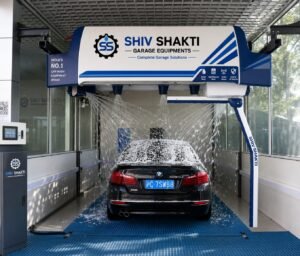
What Is an Automatic Car Washing Machine?
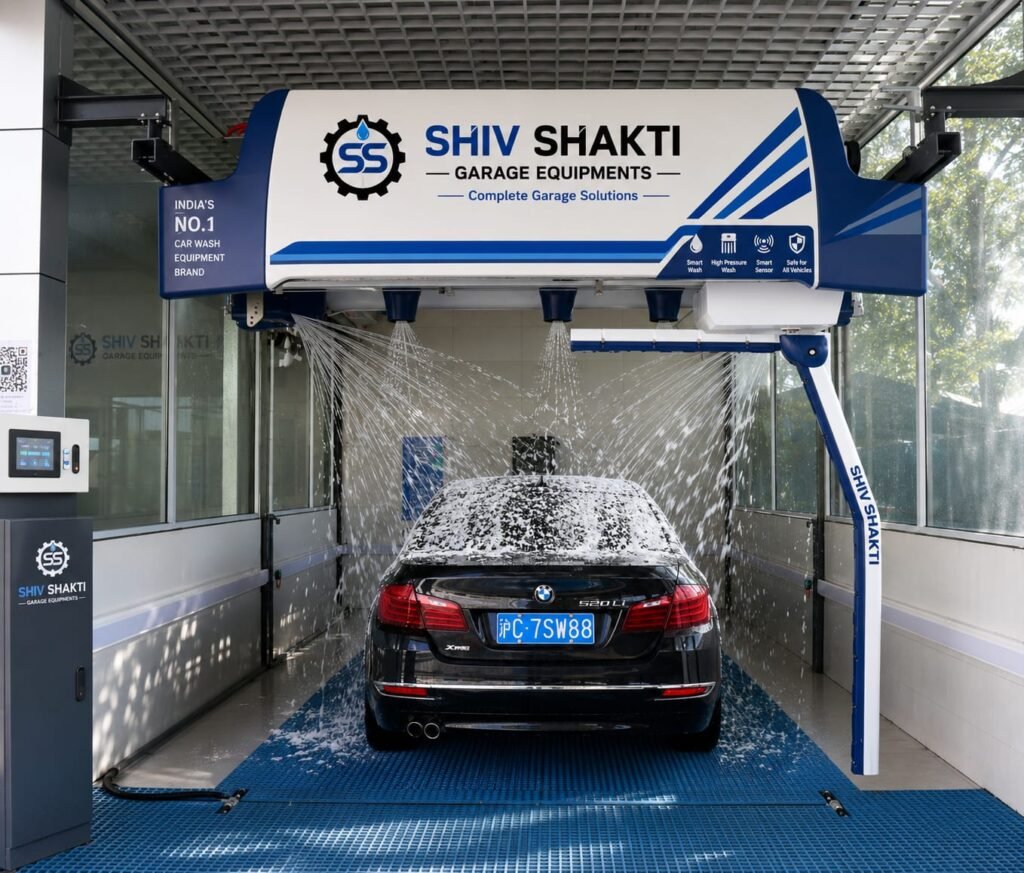
An Automatic Car Washing Machine is an automated vehicle cleaning system designed to wash the exterior of a car with limited manual intervention.
Depending on the machine design, it can perform several washing functions, including:
- Pre-washing
- High-pressure cleaning
- Foam application
- Shampoo washing
- Rinsing
- Wax application
- Water removal
- Air drying
Some systems are designed around high-pressure touchless technology, while others use brushes or a combination of different cleaning methods.https://shivshaktigarage.com/fully-automatic-car-wash-machine/
The right machine depends on your business model, vehicle volume, available space, customer expectations, and budget.
Why Are Automatic Car Washing Machines Becoming Popular?
The growth of car ownership and professional vehicle maintenance has created opportunities for automated car wash businesses.
Faster Vehicle Washing
One of the biggest advantages is speed.
A properly configured system can reduce the amount of manual work involved in routine vehicle washing and allow a business to serve more customers during busy hours.
Consistent Washing Process
Manual washing can vary depending on the experience and attention of individual workers.
Automation can create a more standardized process when the machine is properly configured and maintained.
Reduced Manual Work
A modern car wash still needs employees, but automation can reduce repetitive tasks and allow workers to focus on:
- Customer service
- Vehicle inspection
- Pre-cleaning
- Quality checking
- Interior cleaning
- Detailing
Professional Customer Experience
A modern automatic washing system can make a workshop look more organized and professional.
This can be particularly useful for:
- Car dealerships
- Premium workshops
- Multi-brand service centers
- Dedicated car washes
- Fuel stations
- Fleet operators
How an Automatic Car Washing Machine Works
Although different machines use different technologies, the basic washing process is usually straightforward.
Step 1: Vehicle Inspection
Before starting the wash, the operator should inspect the vehicle.
Look for:
- Existing scratches
- Damaged body panels
- Loose accessories
- Open windows
- Loose parts
- Heavy mud
This simple inspection can help prevent misunderstandings and improve customer communication.
Step 2: Vehicle Positioning
The vehicle is positioned according to the machine manufacturer’s instructions.
Correct positioning is essential for sensors and washing components to operate properly.
Step 3: Pre-Washing
Loose dirt, dust, mud, and other contaminants may be removed using water or a pre-wash system.
Pre-cleaning can be particularly useful when vehicles are heavily soiled.
Step 4: Foam or Shampoo Application
The machine applies an appropriate cleaning solution.
Foam helps loosen dirt and contaminants before the main washing stage.
Step 5: Main Washing Cycle
Depending on the technology, the machine may use:
- High-pressure water
- Rotating brushes
- Spray nozzles
- Specialized washing arms
The purpose is to remove remaining dirt from the vehicle’s exterior.
Step 6: Rinsing
Fresh or appropriately treated water removes remaining shampoo and loosened dirt.
Step 7: Wax or Protective Treatment
Some systems offer optional wax or surface-treatment programs.
These can provide an additional service that businesses can offer customers.
Step 8: Drying
Depending on the machine, drying may be performed through powerful air blowers.
A good drying system improves the final appearance and reduces remaining water droplets.
Step 9: Final Inspection
The operator should inspect the vehicle before returning it to the customer.
A quick final inspection helps identify areas that may require additional attention.
Types of Automatic Car Washing Machines
There isn’t one universal machine for every car wash business.
Understanding the major types will help you select equipment that matches your requirements.
1. Touchless Automatic Car Washing Machine
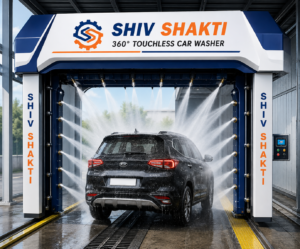
A touchless system primarily uses high-pressure water and cleaning chemicals rather than brushes physically contacting the vehicle.
Advantages
- No direct brush contact
- Fast washing process
- Suitable for touch-free washing services
- Modern customer appeal
- Useful for premium vehicle cleaning
Touchless systems are particularly attractive to customers who are concerned about brush contact with their vehicle’s paintwork.
However, cleaning performance depends on correct water pressure, nozzle design, chemical selection, dwell time, and proper machine settings.
2. Automatic Car Washer 360
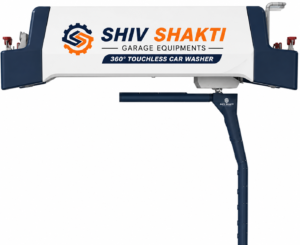
An automatic 360-degree system is designed to provide vehicle coverage from multiple directions.
Depending on the configuration, it may include:
- Foam
- Shampoo
- High-pressure water
- Rinsing
- Wax
- Drying
The objective is to provide comprehensive exterior washing while reducing manual intervention.
Before purchasing an Automatic Car Washing Machine, ask the supplier for a live demonstration and check how effectively the system covers different areas of the vehicle.
3. Rollover or Gantry Car Wash
In a rollover system, the vehicle generally remains stationary while the washing equipment moves around it.
This can be useful for:
- Dealerships
- Service centers
- Professional car wash facilities
- Workshops with moderate vehicle volumes
The required installation space and clearances should always be confirmed before purchase.
4. Tunnel Car Wash
Tunnel systems are designed for businesses expecting high vehicle volumes.
Vehicles move through different washing stages.
A typical system may include:
Pre-Wash
Loose dirt is removed.
Foam Application
Cleaning chemicals are applied.
Main Wash
The vehicle undergoes the primary cleaning process.
Rinse
Water removes remaining cleaning solution.
Wax
An optional protective treatment may be applied.
Drying
Powerful air blowers remove water from the vehicle.
Tunnel systems generally require more space and a larger initial investment than compact automatic systems.
Benefits of an Automatic Car Washing Machine
Investing in an Automatic Car Washing Machine can provide several operational and business advantages.
1. Saves Time
Automation reduces repetitive manual washing work and can shorten the overall service process.
2. Increases Productivity
A workshop can potentially serve more vehicles during the same operating hours.
3. Reduces Labour Dependency
Automation can reduce the amount of manpower required for repetitive exterior washing tasks.
4. Consistent Service
Programmed washing cycles can help provide a more consistent customer experience.
5. Additional Revenue
Businesses can create different packages such as:
- Basic Wash
- Foam Wash
- Premium Wash
- Wash + Wax
- Wash + Interior Cleaning
- Wash + Detailing
6. Professional Appearance
Modern equipment improves the visual appeal of a car wash facility.
7. Better Workflow
Automation allows staff to focus on customer service and value-added services.
Important Features to Look For
Not every machine offers the same performance.
Before purchasing an Automatic Car Washing Machine, compare the following features.
High-Pressure Washing
Adequate pressure is essential for removing dirt and mud.
Foam System
A reliable foam system ensures consistent chemical application.
Multiple Washing Programs
Different programs can help accommodate different vehicle conditions.
Possible programs include:
- Standard wash
- Foam wash
- Rinse
- Wax
- Premium wash
- Drying
Automatic Sensors
Sensors help detect vehicle position and improve operational safety.
Emergency Stop
An emergency-stop system should be easily accessible to operators.
Adjustable Parameters
Advanced systems may allow adjustment of:
- Washing duration
- Water flow
- Chemical dosage
- Drying time
Corrosion-Resistant Construction
Water and chemicals create a demanding environment.
A suitable frame and protective coating can help improve equipment longevity.
Technical Specifications to Compare
Technical specifications vary between manufacturers and machine types, so always compare the actual model you’re considering.
Important specifications include:
| Specification | What to Check |
|---|---|
| Vehicle Compatibility | Car, SUV and other supported vehicles |
| Washing Technology | Touchless, brush, rollover or tunnel |
| Water Pressure | Manufacturer’s recommended operating range |
| Water Consumption | Litres per vehicle/cycle |
| Electrical Requirement | Voltage and connected load |
| Cycle Time | Time required for each washing program |
| Drying System | Blower capacity and configuration |
| Machine Dimensions | Required installation area |
| Frame Material | Steel/coated/corrosion-resistant construction |
| Control System | Manual, digital or programmable |
| Safety System | Sensors and emergency stop |
| Warranty | Coverage and duration |
| Spare Parts | Availability and service support |
Don’t compare machines based on one specification alone. The complete system matters.
Water Requirements
Water is one of the most important resources in a car wash business.
Before installing an Automatic Car Washing Machine, determine:
- Available water supply
- Storage tank capacity
- Water quality
- Drainage
- Filtration requirements
- Recycling possibilities
Water hardness and contamination can affect equipment performance, so discuss local water conditions with the manufacturer.
Water Recycling System
A water recycling system can be an important addition to a professional car wash.
Depending on the system, wastewater may be collected, filtered, treated, and reused for suitable washing stages.
Potential benefits include:
- Lower fresh-water consumption
- Reduced operating costs
- Better resource management
- More sustainable operation
The actual savings depend on the recycling system, water quality, local regulations, and washing volume.
Electricity Requirements
Electrical requirements vary according to machine design.
Before installation, confirm:
- Required voltage
- Connected load
- Motor specifications
- Earthing requirements
- Protection devices
- Cable requirements
A qualified electrician should handle the electrical installation according to applicable safety requirements and the manufacturer’s specifications.
Space Requirements
The required area depends heavily on machine type.
A compact automatic system may require considerably less space than a tunnel system.
Before ordering, consider:
- Machine footprint
- Vehicle entry
- Vehicle exit
- Working clearance
- Ceiling height
- Operator area
- Drainage
- Water storage
- Electrical equipment
Never finalize a machine based only on its advertised dimensions. Ask for the complete installation drawing.
Workshop Layout for an Automatic Car Wash
A practical workflow can look like:
Vehicle Entry → Inspection → Pre-Wash → Automatic Washing → Rinse → Drying → Final Inspection → Exit
This reduces unnecessary vehicle movement.
A good layout should also keep:
- Chemical storage
- Electrical panels
- Water treatment equipment
- Tools
- Maintenance areas
organized and safely separated from customer movement.
How to Choose the Right Automatic Car Washing Machine
Choosing the right equipment starts with understanding your business.
Ask yourself:
How many cars will you wash daily?
A small workshop and a high-volume car wash require different machines.
What vehicles will you serve?
If you expect SUVs and larger vehicles, check the machine’s maximum vehicle dimensions.
How much space do you have?
Your available floor and ceiling space may determine which technology is practical.
What is your budget?
Consider both purchase price and long-term operating costs.
What level of automation do you need?
A basic automated system may be enough for some workshops, while high-volume businesses may benefit from advanced systems.
Automatic Car Washing Machine Price: What Determines Cost?
The price of an Automatic Car Washing Machine can vary significantly.
Factors include:
- Machine technology
- Automation level
- Washing capacity
- Drying system
- Pump quality
- Sensors
- Control system
- Construction materials
- Installation
- Water recycling
- Warranty
- After-sales service
Instead of asking only, “What is the machine price?”, ask:
“What is the total cost of ownership?”
This includes purchase, installation, water, electricity, chemicals, maintenance, spare parts, and labour.
Installation Process
Professional installation is important for automated equipment.https://shivshaktigarage.com/automatic-car-wash-machine-manufacturer-in-india/
Step 1: Site Inspection
Confirm:
- Space
- Floor
- Drainage
- Water
- Electricity
Step 2: Machine Positioning
The machine is positioned according to the installation plan.
Step 3: Utility Connections
Water, electricity, drainage, and other required connections are completed.
Step 4: Testing
The system is tested to confirm proper operation.
Step 5: Operator Training
Staff are trained on:
- Machine operation
- Safety
- Washing programs
- Emergency procedures
- Basic maintenance
Maintenance Guide
Regular maintenance protects your investment.
Daily Maintenance
- Rinse equipment
- Clean nozzles
- Check hoses
- Inspect chemical levels
- Remove dirt and debris
- Clean the washing area
Weekly Maintenance
Check:
- Pumps
- Sensors
- Electrical connections
- Filters
- Spray nozzles
- Hoses
Monthly Maintenance
Inspect:
- Pump performance
- Water pressure
- Chemical dosing
- Electrical systems
- Safety sensors
- Structural components
Always follow the specific maintenance schedule provided with your machine.
Common Mistakes When Buying an Automatic Car Washing Machine
Buying Only on Price
A cheaper machine may have higher operating or maintenance costs.
Ignoring Service Support
Downtime can cost more than the initial price difference between two machines.
Not Checking Vehicle Dimensions
A machine must comfortably accommodate your target vehicles.
Ignoring Drainage
Poor drainage can create safety and hygiene problems.
Using Incorrect Chemicals
Always use compatible automotive cleaning chemicals.
Skipping Operator Training
Poor operation can reduce washing quality and increase equipment wear.
Not Planning for Future Growth
If your business is expected to grow, choose a machine that can handle your future workload where practical.
Is an Automatic Car Washing Machine Profitable?
An automatic car wash can be profitable, but profitability isn’t guaranteed simply because a machine is automated.
Your business model should consider:
- Number of vehicles per day
- Average washing price
- Working days
- Labour expenses
- Water expenses
- Electricity
- Chemical costs
- Maintenance
- Rent
- Marketing
- Financing costs
Simple Revenue Formula
Monthly Revenue = Vehicles Washed × Average Service Price × Working Days
For example, if a business washes 25 vehicles per day and operates 26 days per month, its monthly vehicle volume would be:
25 × 26 = 650 vehicles
If the average service price is ₹300:
650 × ₹300 = ₹1,95,000 gross monthly washing revenue
This is only an example. Actual profitability depends on all operating costs and local pricing.
Who Should Buy an Automatic Car Washing Machine?
An automated system can be suitable for:
Dedicated Car Wash Businesses
Businesses focused primarily on vehicle washing can use automation to increase throughput.
Automobile Workshops
A workshop can add automatic washing as an additional service.
Car Dealerships
Dealerships can use automated washing for vehicle preparation and customer delivery.
Fuel Stations
Car washing can provide an additional revenue stream.
Fleet Operators
Fleet owners can streamline regular vehicle cleaning.
Premium Detailing Centers
An automatic pre-wash can complement more detailed manual services.
Safety Guidelines
Safety should always come before speed.
Operators should:
- Follow manufacturer instructions
- Check vehicle positioning
- Use emergency-stop controls when necessary
- Keep unauthorized people away from moving equipment
- Inspect electrical connections
- Keep floors free from unnecessary obstacles
- Use recommended chemicals
- Follow appropriate PPE requirements
Regular operator training is one of the simplest ways to improve workplace safety.
What Makes a Good Manufacturer or Supplier?
When choosing an Automatic Car Washing Machine, don’t evaluate the machine alone. Evaluate the company behind it.
A dependable supplier should offer:
- Clear technical specifications
- Demonstration
- Installation assistance
- Operator training
- Warranty
- Spare parts
- Technical support
- Maintenance guidance
A strong after-sales network can make a major difference over the machine’s working life.
Why Choose Shiv Shakti Garage Equipments?
Shiv Shakti Garage Equipments has more than 18 years of experience in car garage machinery and provides equipment solutions to customers across India.
The company offers a wide range of automotive workshop equipment, including:
- Automatic Car Washing Machines
- Car Washing Lifts
- Two Post Car Lifts
- Scissor Lifts
- Wheel Balancers
- 3D Wheel Alignment Machines
- Tyre Changers
- Paint Booths
- Air Compressors
- Garage Equipment
- Complete Workshop Setup Solutions
The objective is to help workshop owners choose equipment according to their business requirements, available space, expected workload, and budget.
Frequently Asked Questions
1. What is an Automatic Car Washing Machine?
It is an automated vehicle cleaning system that performs one or more stages of exterior car washing with reduced manual intervention.
2. Is an automatic car wash better than manual washing?
Automation can provide faster and more consistent routine washing, while manual washing offers greater flexibility for specialized cleaning. The best choice depends on the business.
3. How much does an Automatic Car Washing Machine cost?
Pricing varies according to machine technology, capacity, automation, drying system, installation, and included features. Request a model-specific quotation rather than relying on a generic price.
4. Can an automatic machine wash SUVs?
Many systems can wash SUVs, but the exact vehicle height, width, length, and wheelbase limits must be checked before purchase.
5. Does an automatic car wash use a lot of water?
Water consumption varies by machine and washing program. Water recycling and proper system configuration can help reduce fresh-water consumption.
6. Is a touchless car wash safe for vehicle paint?
Touchless systems avoid direct brush contact, but cleaning results depend on correct pressure, chemicals, nozzle configuration, and operating procedures.
7. How long does an automatic car wash take?
Cycle time varies by machine and program. Ask the manufacturer for actual cycle times for the specific configuration you are considering.
8. Does an automatic car wash require employees?
Some staff are generally still needed for vehicle inspection, customer service, pre-cleaning, quality control, machine operation, and other services.
9. How often should the machine be serviced?
Follow the manufacturer’s maintenance schedule. Daily cleaning and regular inspections are essential.
10. Can I install an automatic car wash in an existing workshop?
Possibly, provided the site meets the machine’s space, drainage, water, electrical, and structural requirements.
11. Is water recycling necessary?
It may not be mandatory for every setup, but it can be useful for reducing fresh-water consumption and operating costs.
12. Which is better: rollover or tunnel car wash?
Rollover systems can be suitable for moderate volumes and limited spaces, while tunnel systems are generally designed for higher throughput. The right choice depends on your business.
13. What should I check before buying?
Check machine capacity, dimensions, water consumption, electrical requirements, washing technology, warranty, spare parts, installation, and service support.
14. Can an automatic car wash increase revenue?
Yes, it can create an additional service and potentially increase vehicle throughput. Actual profitability depends on pricing, customer volume, operating expenses, and investment.
15. Why is after-sales service important?
Reliable technical support and spare parts can reduce downtime and help maintain consistent machine performance.
Final Automatic Car Washing Machine Buying Checklist
Before purchasing, make sure you have checked:
- Machine type
- Vehicle compatibility
- Washing technology
- Cycle time
- Water consumption
- Electrical requirements
- Machine dimensions
- Drainage
- Drying system
- Sensors
- Emergency stop
- Warranty
- Spare parts
- Installation
- Operator training
- Maintenance requirements
- Total operating cost
- Manufacturer reputation
Final Conclusion
An Automatic Car Washing Machine can transform the way a modern workshop or car wash business handles vehicle cleaning. It can reduce repetitive manual work, improve service consistency, increase productivity, and create additional revenue opportunities.
But successful automation starts with the right decision.
Don’t choose equipment only because it has a low price or attractive features. Look at the complete picture: machine quality, washing technology, vehicle compatibility, site requirements, water consumption, electrical requirements, maintenance, warranty, spare parts, installation, and after-sales service.
For businesses planning long-term growth, the right automatic washing system can become an important part of a professional automotive service operation.
If you’re planning a new car wash, upgrading an existing workshop, or adding automated washing to your garage, evaluate your requirements carefully and choose equipment that is designed for your actual workload.
Contact Shiv Shakti Garage Equipments
Shiv Shakti Garage Equipments
Address: E-72, Ground Floor, Vishnu Garden, New Delhi – 110018
Phone: +91-7827552107
Website: https://shivshaktigarage.com
Service Area: All Over India
For automatic car washing equipment and complete garage machinery solutions, contact Shiv Shakti Garage Equipments and discuss your workshop requirements.
Pingback: Best Fully Automatic Car Wash Machine in India | 2026 Guide
Pingback: Best Automatic Car Wash Machine Manufacturer in India | 2026 Guide