
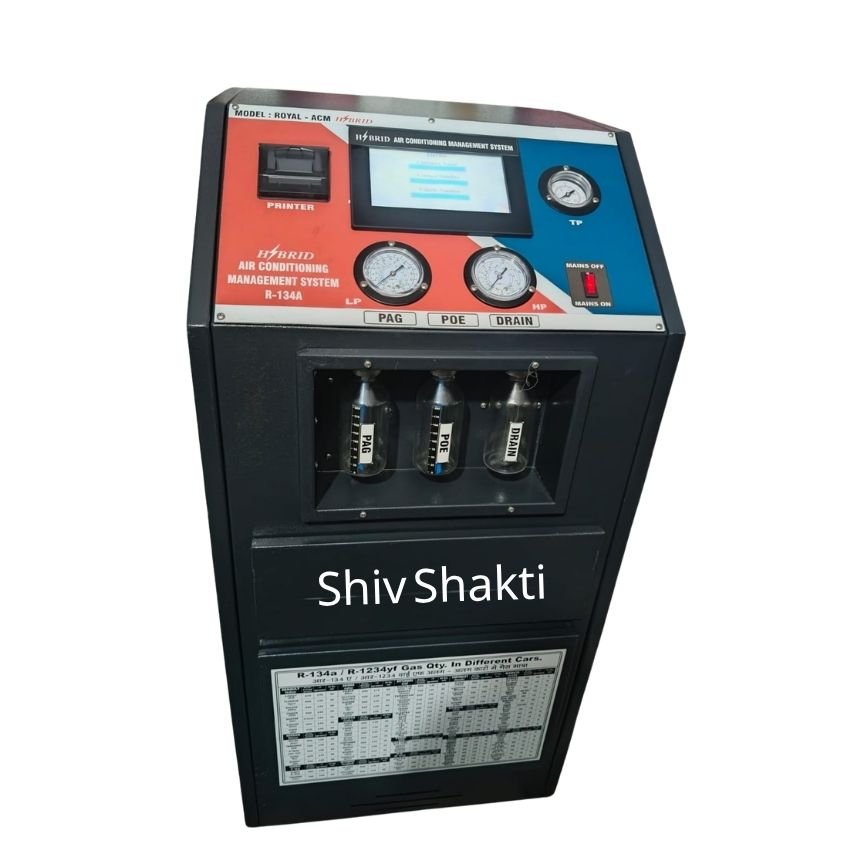
Automatic vs manual Ac Service Machine
Automatic vs Manual AC Service Machine Choosing the right AC recycling machine is one of the most important decisions for any automotive workshop. Whether you’re starting a new garage, upgrading your existing equipment, or expanding your AC service business, understanding the difference between an Automatic vs Manual AC Service Machine can save you time, money, and future maintenance costs. Today’s customers expect fast, accurate, and professional air conditioning service. A reliable AC recycling machine helps recover refrigerant, remove moisture, recycle gas, inject compressor oil, and recharge the vehicle’s AC system with precision. However, not every workshop has the same budget, service volume, or business goals, making the choice between an automatic and manual machine an important one.https://shivshaktigarage.com/car-ac-service-equipment-manufacturer-in-india/ In this complete guide, we’ll compare Automatic vs Manual AC Service Machine models in detail, covering their working principles, features, benefits, drawbacks, maintenance, pricing, return on investment, and buying recommendations. By the end of this article, you’ll know which type of machine is the right investment for your workshop. Why Choosing the Right AC Service Machine Matters A car AC system requires precision. Incorrect refrigerant charging or poor vacuum performance can reduce cooling efficiency, damage expensive components, and lead to customer complaints. Selecting the right machine helps you: Deliver accurate refrigerant charging. Improve workshop productivity. Reduce technician errors. Save refrigerant. Increase customer satisfaction. Extend AC compressor life. Build a professional reputation. Increase long-term profitability. This is why understanding Automatic vs Manual AC Service Machine options is essential before making a purchase. What Is an AC Service Machine? An AC recycling machine is a specialized workshop tool designed to service automotive air conditioning systems. It performs multiple tasks in one machine: Refrigerant recovery Refrigerant recycling Vacuum generation Moisture removal Oil separation Leak testing Refrigerant charging Instead of releasing refrigerant into the atmosphere, the machine safely recovers, cleans, and reuses it whenever possible, helping workshops comply with environmental standards while reducing operating costs. Understanding Automatic AC Service Machines What Is an Automatic AC Recycling Machine? An automatic AC recycling machine performs the entire AC servicing process with minimal technician involvement. After selecting the correct vehicle settings and connecting the service hoses, the machine automatically carries out the complete service cycle. Typical automatic functions include: Refrigerant recovery Oil separation Vacuum creation Leak testing Oil injection Refrigerant charging Automatic completion notification Modern automatic machines use intelligent sensors and electronic controls to deliver highly accurate results. How an Automatic AC Service Machine Works The process generally follows these steps: Step 1: Connect Service Hoses The technician connects the high-pressure and low-pressure hoses to the vehicle. Step 2: Select Service Program The desired operating mode is selected using the touchscreen or control panel. Step 3: Refrigerant Recovery The machine safely recovers refrigerant from the vehicle. Step 4: Refrigerant Recycling Recovered refrigerant passes through filters that remove oil, moisture, and contaminants. Step 5: Vacuum Process The machine creates a deep vacuum to remove air and moisture from the AC system. Step 6: Leak Check Many advanced machines automatically perform a vacuum leak test. Step 7: Oil Injection Fresh compressor oil is added in the correct quantity. Step 8: Refrigerant Charging The machine injects the exact refrigerant weight required for the vehicle. Step 9: Completion The technician receives a notification when the process is complete. The automation significantly reduces manual intervention and improves consistency. Advantages of an Automatic AC Service Machine 1. High Accuracy Automatic machines deliver precise refrigerant charging, reducing the risk of overcharging or undercharging. 2. Faster Service Automation shortens service time, allowing workshops to handle more vehicles each day. 3. Easy to Operate Even technicians with limited experience can achieve professional results because the machine guides the process. 4. Reduced Human Error Automatic controls minimize mistakes in refrigerant recovery, oil injection, and charging. 5. Better Customer Satisfaction Accurate servicing leads to: Improved cooling performance Fewer repeat visits Increased trust Positive customer reviews 6. Suitable for High-Volume Workshops Automatic machines are ideal for: Car dealerships Multi-brand workshops Fleet maintenance centers Professional AC service stations Disadvantages of an Automatic AC Service Machine While highly capable, automatic machines have some considerations. Higher Initial Investment They generally cost more than manual machines due to advanced sensors, electronics, and automation features. More Advanced Electronics Because of sophisticated control systems, repairs may require trained technicians and genuine replacement parts. Regular Calibration Automatic machines should be calibrated periodically to maintain charging accuracy and optimal performance. Understanding Manual AC Service Machines What Is a Manual AC Service Machine? A manual AC recycling machine requires the technician to control most servicing steps manually. Instead of running a fully automated cycle, the operator performs tasks such as: Refrigerant recovery Vacuum monitoring Oil addition Refrigerant charging This gives experienced technicians greater control over each stage of the servicing process. How a Manual AC Service Machine Works Step 1: Connect Service Hoses Attach the high-pressure and low-pressure hoses securely. Step 2: Recover Refrigerant The technician manually starts and monitors refrigerant recovery. Step 3: Monitor Vacuum Vacuum creation is observed manually using gauges and timers. Step 4: Add Compressor Oil The technician measures and injects the correct amount of fresh oil. Step 5: Recharge Refrigerant Refrigerant is charged according to manufacturer specifications while monitoring gauges. Each stage requires careful attention and technical knowledge. Advantages of a Manual AC Service Machine Lower Purchase Cost One of the biggest advantages of manual machines is affordability. They are an excellent choice for workshops with limited budgets. Greater Technician Control Experienced technicians can customize the service process based on the condition of each vehicle. Easier Repairs Manual machines typically have simpler designs with fewer electronic components, making maintenance and repairs more straightforward. Ideal for Small Workshops Manual machines are suitable for: Local garages Small service stations Independent mechanics Low-volume workshops Disadvantages of a Manual AC Service Machine Manual operation has certain limitations. Increased Technician Dependence Service quality depends heavily on the technician’s knowledge and experience. Longer Service Time Manual operation generally takes more time than a fully automated cycle. https://shivshaktigarage.com/garage-equipment-manufacturers-in-india/ Greater Risk of Human Error