
Engine Decarbonizing Machine Manufacturer in India: Complete Guide for Workshops, Dealers & Service Center
What Is an Engine Decarbonizing Machine?
An engine decarbonizing machine is specialized automotive workshop equipment used for engine carbon-cleaning applications.
Different manufacturers use different technologies and processes.https://shivshaktigarage.com/engine-decarbonizing-machine-manufacturer-in-india/
One commonly marketed technology is HHO or hydroxy-based carbon cleaning. These machines generally use electrolysis to generate a hydrogen/oxygen gas mixture, which is then supplied to the engine according to the manufacturer’s specified procedure.
A typical machine may include:
- Electrolysis cell
- Water reservoir
- Gas-generation system
- Digital display
- Timer
- Control panel
- Hoses
- Connectors
- Flow-control system
- Safety components
The exact construction and specifications vary between manufacturers.
For example, current Indian product listings include machines designed for different capacities, including systems marketed for 6000cc, 10,000cc and even larger engines. (Tradeindia)
This is why choosing the right manufacturer is more important than simply choosing a machine based on a photograph or advertised price.
Why Choosing the Right Engine Decarbonizing Machine Manufacturer Matters
Imagine buying a machine for your workshop today.
The machine works properly for the first few months.
Then one day, a hose, control component, electrical part or electrolysis component needs replacement.
What happens next?
If you purchased from a manufacturer with proper technical support and spare-parts availability, the problem may be relatively straightforward to resolve.
But if you purchased from an unknown seller who only delivered the machine, getting technical assistance may become difficult.
This is why the manufacturer’s role continues long after the sale.
A good manufacturer can provide:
- Technical specifications
- Machine customization
- Installation support
- Operator training
- Warranty
- Spare parts
- Maintenance guidance
- Technical assistance
- Product upgrades
The machine is the product.
The manufacturer is the long-term support system behind that product.
Engine Decarbonizing Machine Manufacturer vs Supplier
This distinction is important for buyers.
A manufacturer designs and/or produces the equipment.
A supplier or distributor may purchase equipment from another company and resell it.
Neither option is automatically bad.
However, if you are purchasing directly for a workshop, dealership, franchise network or distribution business, understanding who actually manufactures the machine can be useful.
Buying Directly From a Manufacturer
Potential advantages include:
- Direct technical communication
- Better understanding of specifications
- Customization possibilities
- Direct warranty support
- Spare-parts access
- Bulk-order discussions
- Private-label opportunities in some cases
Buying From a Supplier
Potential advantages may include:
- Local availability
- Multiple brands
- Faster delivery in some locations
- Local service support
Before ordering, simply ask:
“Are you the manufacturer or distributor?”
A professional company should be able to answer clearly.
How Does an Engine Decarbonizing Machine Work?
The exact working process depends on the machine technology.
In HHO-based systems, water is processed through an electrolysis system to generate hydrogen and oxygen.
The generated gas is then introduced into the vehicle according to the machine manufacturer’s recommended procedure.
The equipment may include:
- Water tank
- Electrolysis cell
- Gas-generation chamber
- Control system
- Hoses
- Connectors
- Safety system
- Timer
- Display
Some professional machines include touchscreen controls and printer functions. One current Indian listing, for example, describes a touchscreen/printer HHO system marketed for vehicles up to 6000cc. (Nitrogen Inflator)
However, specifications differ considerably.
Therefore, technicians should always operate the equipment according to the manufacturer’s manual.
Why Engine Carbon Deposits Matter
Internal combustion engines operate under high temperature and pressure.
Over time, combustion-related residues can accumulate depending on:
- Engine design
- Fuel type
- Driving pattern
- Maintenance history
- Vehicle age
- Fuel quality
- Operating temperature
Vehicles that spend considerable time in traffic and make frequent short journeys may experience different operating conditions from vehicles used primarily for longer highway journeys.
Carbon deposits can be associated with certain performance concerns, but not every engine problem is caused by carbon deposits.
This is why proper diagnosis should come before recommending a cleaning service.
Engine Decarbonizing Machine Manufacturer: What Should You Look For?
When comparing manufacturers, don’t start with price.
Start with quality.
Here are the major factors to evaluate.
1. Manufacturing Experience
Ask how long the company has been manufacturing garage equipment or engine-cleaning equipment.
Experience can indicate that the manufacturer understands:
- Workshop requirements
- Common machine failures
- Technician needs
- Spare parts
- Product development
- Field applications
However, years in business should not be the only criterion.
Look at the actual product quality as well.
2. Manufacturing Facility
If possible, understand where and how the machines are manufactured.
A serious manufacturer should be able to explain:
- Assembly process
- Quality control
- Component sourcing
- Testing
- Packaging
- Final inspection
A proper manufacturing process can improve consistency between machines.
What Does a Good Manufacturing Process Look Like?
A professional manufacturing process may include several stages.
Stage 1: Component Selection
The manufacturer selects electrical, mechanical and gas-system components.
Stage 2: Assembly
Components are assembled according to the machine design.
Stage 3: Electrical Testing
Electrical systems are checked for correct operation.
Stage 4: Gas-System Testing
Relevant gas-generation and flow systems are checked.
Stage 5: Safety Testing
Safety functions should be verified.
Stage 6: Final Inspection
The complete machine is inspected before dispatch.
Stage 7: Packaging
The machine should be packed appropriately for transportation.
A manufacturer with a structured quality-control process is generally preferable to a company assembling equipment without consistent testing.
Engine Decarbonizing Machine Manufacturing Quality
Quality isn’t just about the external appearance.
A machine can have a beautiful body and still contain poor-quality internal components.
When evaluating an Engine Decarbonizing Machine Manufacturer, ask about:
- Electrical components
- Electrolysis cell
- Water tank
- Hoses
- Connectors
- Control panel
- Internal wiring
- Cooling system
- Safety components
These components influence the machine’s reliability.
Engine Capacity: One of the Most Important Specifications
A professional manufacturer should clearly specify the intended engine capacity of each model.
Common market categories include machines designed for:
- Small passenger vehicles
- 3000cc-class engines
- 4000cc-class engines
- 6000cc-class engines
- 7500cc-class engines
- 10,000cc engines
- Heavy-duty engines
Current Indian listings demonstrate that the market includes equipment across a very wide capacity range. (Tradeindia)
Don’t purchase a high-capacity machine simply because it sounds better.
Choose according to your workshop.
3000cc Engine Decarbonizing Machine
A 3000cc-class machine may be appropriate for workshops primarily servicing passenger cars and selected SUVs, depending on the manufacturer’s specifications.
This can be a practical option for smaller garages.
The advantage is that you don’t necessarily need to invest in heavy-duty equipment when your customer base doesn’t require it.
4000cc Engine Decarbonizing Machine
A 4000cc-class system can provide additional flexibility for workshops servicing larger passenger vehicles and SUVs.
Before purchasing, check:
- Maximum engine capacity
- Petrol compatibility
- Diesel compatibility
- Gas output
- Operating cycle
- Warranty
6000cc Engine Decarbonizing Machine
A 6000cc machine can be particularly attractive for multi-brand automobile workshops.
Some current Indian manufacturers and suppliers list automatic HHO machines designed around this capacity, including models with touchscreen and printer functions. (Nitrogen Inflator)
A machine in this category may be suitable for workshops servicing:
- Hatchbacks
- Sedans
- SUVs
- Petrol vehicles
- Diesel vehicles
- Premium vehicles
Actual application should always be confirmed with the manufacturer.
7500cc Engine Decarbonizing Machine
For workshops that regularly encounter larger engines, a 7500cc-class machine may offer additional flexibility.
This could be useful for:
- Large SUVs
- Premium vehicles
- Larger diesel engines
- Selected commercial applications
The important thing is to select capacity based on actual business requirements.
10,000cc Engine Decarbonizing Machine
Heavy-duty applications may require machines designed for engines up to approximately 10,000cc or more.
Current Indian listings include machines marketed for 10,000cc applications. (Tradeindia)
These machines can be relevant to:
- Trucks
- Buses
- Heavy commercial vehicles
- Large diesel engines
They represent a different investment category from ordinary car-workshop equipment.
Heavy-Duty Engine Decarbonizing Machine Manufacturer
If you operate a truck or bus workshop, you should specifically look for a manufacturer experienced in heavy-duty applications.
Ask:
- What is the maximum engine capacity?
- Is the machine suitable for commercial diesel engines?
- What is the gas output?
- What is the operating cycle?
- What safety systems are included?
- What spare parts are available?
- Does the company provide onsite service?
A manufacturer that only specializes in small passenger-car equipment may not be the ideal choice for heavy-duty applications.
HHO Engine Decarbonizing Machine Manufacturer
HHO-based systems are one of the major categories available in the Indian market.
Some manufacturers specialize specifically in HHO generators and carbon-cleaning equipment.
For example, Uniko India describes itself as an HHO generator and engine decarbonizing machine manufacturer based in Surat, Gujarat. (unikoindia)
HydroTech also describes itself as a manufacturer of HHO-based carbon-cleaning and decarbonizing equipment, with products for automotive and other applications. (Hydro Tech Clean Energy Co)
This demonstrates that the Indian market includes manufacturers with specialized expertise in this technology.
What Is HHO Technology?
HHO is a commercial term commonly used for a hydrogen/oxygen gas mixture generated through electrolysis.
The basic process involves passing an electrical current through water to generate gases.
The generated gas is then used according to the equipment’s intended application and operating procedure.
Because hydrogen is highly flammable, proper safety procedures are essential.
Technicians should:
- Follow the machine manual
- Maintain suitable ventilation
- Check hoses
- Check connectors
- Follow electrical safety procedures
- Avoid unauthorized modifications
Important Features to Check With a Manufacturer
Before buying, ask the manufacturer for complete specifications.
Digital Display
A digital display can make operating parameters easier to monitor.
Automatic Timer
A timer can help technicians maintain consistent operating cycles.
Touchscreen
Some professional models use touchscreen interfaces.
Printer
Certain machines include printer functionality for service documentation.
Automatic Shutdown
Automatic safety functions can add convenience and protection.
Gas Output Monitoring
This can help technicians monitor machine operation.
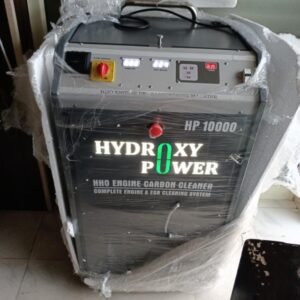
Why Gas Output Matters
Gas output is an important specification for HHO machines.
Current Indian product listings show machines with different gas-generation capacities, including models marketed around 1000 L/h and higher. (Nitrogen Inflator)
However, gas output should not be considered independently.
A higher number does not automatically mean a better machine.
Compare:
Gas Output + Engine Capacity + Cell Design + Safety + Reliability
together.
Engine Decarbonizing Machine Manufacturer: Build Quality
A workshop machine should be designed for repeated commercial use.
Look for:
- Strong body
- Durable wheels
- Quality electrical wiring
- Good connectors
- Industrial-grade hoses
- Reliable switches
- Quality electrolysis components
- Properly protected internal components
The machine should be capable of operating in a normal workshop environment.https://shivshaktigarage.com/common-balancing-problems/
Material Used in Manufacturing
Manufacturers may use materials such as: https://shivshaktigarage.com/engine-decarbonizing-machine-price/
- Mild steel
- Stainless steel
- Fibre-reinforced materials
- Metal panels
- Powder-coated structures
Each material has advantages and disadvantages.
The important question is not simply:
“Which material is used?”
Instead ask:
“Is the machine durable enough for my intended workload?”
Customization From an Engine Decarbonizing Machine Manufacturer
One advantage of working directly with a manufacturer can be customization.
Depending on the manufacturer, customization may include:
- Machine colour
- Branding
- Logo
- Capacity
- Control panel
- Accessories
- Hose configuration
- Machine dimensions
- Private-label requirements
Customization is particularly useful for:
- Garage chains
- Distributors
- Automotive franchises
- Workshop groups
- Exporters
- Corporate buyers
Always confirm customization options before placing a bulk order.
Private Label Engine Decarbonizing Machines
Some businesses may want to sell machines under their own brand.
This can be called:
Private Label Manufacturing
or
OEM Manufacturing
If you are interested in this business model, ask the manufacturer about:
- Minimum order quantity
- Branding options
- Packaging
- Logo printing
- Product manuals
- Warranty structure
- Spare parts
- Technical support
- Export documentation
Not every manufacturer provides private-label manufacturing, so this should be discussed before ordering.
Engine Decarbonizing Machine Manufacturer for Dealers
If you are a garage equipment dealer, you may need a manufacturer that can provide consistent supply.
Important factors include:
- Dealer pricing
- Minimum order quantity
- Delivery time
- Product availability
- Marketing support
- Product training
- Spare parts
- Warranty
- Territory policy
A dealer should ideally choose a manufacturer that can maintain consistent quality across multiple batches.
Engine Decarbonizing Machine Manufacturer for Export
India has a growing manufacturing ecosystem for automotive workshop equipment.
Some Indian manufacturers also market engine decarbonizing and HHO equipment internationally.
For example, HydroTech states that its products are supplied in India and exported to international markets. (Hydrotech India)
If you are an exporter, ask the manufacturer about:
- Export packaging
- Country-specific electrical requirements
- Documentation
- Product certification
- Shipping dimensions
- Spare parts
- Warranty for overseas customers
Certifications and Quality Standards
When evaluating a manufacturer, ask about applicable certifications.
Depending on the company and product, you may encounter certifications or registrations such as:
- ISO
- CE
- MSME
- Startup India
- Other product-specific testing
For example, Uniko India lists ISO 9001:2015, CE and MSME-related credentials among its certifications and registrations. (unikoindia)
HydroTech also lists several certifications and testing credentials on its website. (Hydro Tech Clean Energy Co)
However, buyers should verify certificates directly with the manufacturer and confirm that they apply to the exact product being purchased.
Why Certification Should Not Be Your Only Selection Factor
A certificate is useful.
But it doesn’t automatically mean that a machine is perfect for your workshop.
You should also evaluate:
- Product quality
- Warranty
- Service
- Spare parts
- Machine capacity
- Customer support
- Demonstration
- Field reputation
Think of certification as one part of your due diligence.
Engine Decarbonizing Machine Manufacturer: Testing Before Dispatch
A good manufacturer should have a testing process before dispatch.
Ask whether the machine undergoes:
Electrical Testing
Checking voltage and internal wiring.
Functional Testing
Ensuring controls operate correctly.
Gas Generation Testing
Checking the gas-generation system.
Leak Inspection
Inspecting hoses and connections.
Safety Testing
Verifying safety functions.
Final Quality Inspection
Checking the complete machine before packing.
This helps reduce the chances of receiving equipment with manufacturing defects.
Installation Support
A professional manufacturer should explain how the machine should be installed.
Installation may involve:
- Machine positioning
- Electrical connection
- Water filling
- Hose connection
- Initial testing
- Operator demonstration
If installation is included, ask whether it is:
On-site installation
or
Remote/video guidance
These are different levels of support.
Technician Training
The machine is only useful if technicians know how to operate it.
Ask whether the manufacturer provides:
- Installation training
- Operating training
- Safety training
- Maintenance training
- Troubleshooting guidance
Training can reduce operator errors.
Engine Decarbonizing Machine Manufacturer Warranty
Warranty is one of the most important questions before purchase.
Ask:
How Long Is the Warranty?
Confirm the exact period.
What Components Are Covered?
Ask whether major components are included.
What Is Excluded?
Understand the limitations.
Who Pays Transportation?
If a component needs replacement, find out who bears shipping costs.
Is Onsite Service Available?
This can be important for commercial workshops.
Spare Parts Support
Before purchasing, ask for a list of commonly replaced parts.
For example:
- Hoses
- Connectors
- Filters
- Pumps
- Electrolysis cells
- Electrical components
- Control boards
- Switches
A manufacturer with an established spare-parts system can reduce downtime.
Engine Decarbonizing Machine Price in India
The price of engine decarbonizing machines varies significantly depending on technology, capacity, automation, build quality and manufacturer.
Current Indian market listings show examples ranging from around ₹35,000 for basic machines to ₹1.5–₹2 lakh for several professional systems, with some specialized high-capacity machines listed at ₹3 lakh and above. (Tradeindia)
One current listing, for example, gives an approximate price of ₹1.75 lakh for a touchscreen/printer HHO machine marketed for up to 6000cc applications. (Nitrogen Inflator)
Another Indian manufacturer listing shows a machine around ₹1.20 lakh with specifications including 2 kVA rated capacity, 1000 L/h maximum gas output and 2-year warranty. (Sapet)
These are market examples rather than fixed prices.
The final quotation can vary according to:
- Machine model
- Engine capacity
- Accessories
- GST
- Transportation
- Installation
- Warranty
- Customization
How to Choose an Engine Decarbonizing Machine Manufacturer in India
Use this simple process.
Step 1: Shortlist Manufacturers
Find three to five companies.
Step 2: Compare Technical Specifications
Create a table.
Step 3: Request Quotations
Ask for complete pricing.
Step 4: Request Product Demonstration
See the machine operating.
Step 5: Check Warranty
Understand exactly what is covered.
Step 6: Check Spare Parts
Ask about availability and pricing.
Step 7: Check Customer Support
Ask how technical problems are handled.
Step 8: Calculate ROI
Estimate how much business the machine can realistically generate.
Step 9: Make Your Decision
Choose based on overall value.
Engine Decarbonizing Machine Manufacturer Comparison Table
| Factor | Manufacturer A | Manufacturer B | Manufacturer C |
|---|---|---|---|
| Machine Capacity | ___cc | ___cc | ___cc |
| Technology | ___ | ___ | ___ |
| Gas Output | ___ | ___ | ___ |
| Automation | ___ | ___ | ___ |
| Display | Yes/No | Yes/No | Yes/No |
| Safety Features | ___ | ___ | ___ |
| Accessories | ___ | ___ | ___ |
| Warranty | ___ | ___ | ___ |
| Installation | Yes/No | Yes/No | Yes/No |
| Training | Yes/No | Yes/No | Yes/No |
| Spare Parts | Yes/No | Yes/No | Yes/No |
| After-Sales Support | ___ | ___ | ___ |
| Final Price | ₹___ | ₹___ | ₹___ |
This table makes the buying decision much easier.
Engine Decarbonizing Machine Manufacturer for Small Workshops
A small workshop may not need a high-end heavy-duty machine.
If you mainly service:
- Hatchbacks
- Small sedans
- Compact SUVs
a smaller or mid-range machine may be sufficient, provided it is approved for those applications.
Your priorities should be:
- Affordable investment
- Easy operation
- Suitable capacity
- Low maintenance
- Warranty
- Spare parts
Manufacturer for Large Workshops
A large workshop may require:
- Higher capacity
- Faster workflow
- Automation
- Better documentation
- Strong technical support
- Higher durability
If the machine is expected to operate multiple times every day, reliability becomes particularly important.
Manufacturer for Multi-Brand Workshops
Multi-brand workshops need versatility.
A customer may arrive with:
- Petrol engine
- Diesel engine
- Small engine
- Large engine
- SUV
- Premium vehicle
Therefore, the machine should provide a suitable operating range.
This is why many workshop owners prefer professional machines with broader capacity.
Manufacturer for Truck and Bus Workshops
Heavy-vehicle workshops should specifically seek manufacturers with experience in larger engine applications.
Ask for:
- Heavy-duty models
- Maximum supported engine size
- Gas output
- Commercial-vehicle compatibility
- Service support
- Spare-parts availability
Do not assume that a passenger-car machine can be used for trucks.https://shivshaktigarage.com/car-ac-service-equipment-manufacturer-in-india/
Engine Decarbonizing Machine Manufacturer and Business ROI
Manufacturers can help workshop owners understand machine utilization.
Suppose a machine costs:
₹1,25,000
Your workshop charges:
₹1,500 per service
If you perform five services per week:
5 × ₹1,500 = ₹7,500 weekly
Approximately:
₹30,000 gross monthly revenue
But this is only gross revenue.
Subtract:
- Technician cost
- Electricity
- Water
- Maintenance
- Marketing
- Taxes
- Other expenses
Then calculate your actual contribution.
This helps determine whether the investment makes sense.
How Manufacturers Can Help Workshop Owners
A good manufacturer can provide more than a machine.
They can help with:
Product Training
Teach technicians how to operate the machine.
Service Training
Explain recommended procedures.
Marketing Materials
Provide product photographs, brochures or videos where available.
Technical Support
Help troubleshoot issues.
Spare Parts
Supply replacement components.
Product Updates
Inform dealers about newer models.
This type of support can make a significant difference for a new workshop.
Engine Decarbonizing Machine Maintenance
After purchasing the machine, maintenance becomes the workshop’s responsibility.
Daily Checks
Inspect:
- Water level
- Hoses
- Connectors
- Electrical cables
- Machine body
- Control panel
Weekly Checks
Inspect:
- Fittings
- Hoses
- Water system
- Electrical connections
- External condition
Periodic Checks
Follow the manufacturer’s maintenance schedule.
Replace parts when required.
Don’t continue operating the machine if there is a serious safety issue.
Safety When Operating Engine Decarbonizing Equipment
Safety should always be taken seriously.
For HHO/hydrogen-containing systems:
- Maintain suitable ventilation.
- Keep unauthorized personnel away.
- Check gas connections.
- Follow electrical safety procedures.
- Use approved hoses and connectors.
- Don’t modify the gas system.
- Train technicians.
- Follow the machine manual.
- Stop operation if abnormal conditions occur.
Hydrogen is flammable, so proper handling is essential.
Does Engine Carbon Cleaning Fix Every Engine Problem?
No.
This is something a responsible manufacturer and workshop should communicate clearly.
Carbon cleaning does not automatically repair:
- Damaged piston rings
- Low compression
- Faulty injectors
- Turbocharger damage
- Valve damage
- Electrical faults
- Sensor failure
- Serious oil consumption
- Cooling-system problems
The vehicle should be diagnosed before service.
Benefits of Working With a Professional Manufacturer
Choosing an established Engine Decarbonizing Machine Manufacturer can provide several potential benefits.
Better Product Understanding
The manufacturer understands the machine internally.
Technical Support
Direct technical communication can be useful.
Spare Parts
Replacement components may be easier to obtain.
Customization
Some manufacturers can modify equipment for specific requirements.
Warranty
Direct manufacturer support can simplify warranty claims.
Training
Technician training can improve machine utilization.
Long-Term Relationship
A good supplier relationship can continue as your workshop grows.
Engine Decarbonizing Machine Manufacturer for Complete Garage Setup
If you are building a new automobile workshop, engine decarbonizing equipment can be combined with other machines.
A professional workshop may include:
Lifting Equipment
- Two-post car lift
- Scissor lift
- Washing lift
- Four-post lift
Wheel Service Equipment
- 3D wheel alignment machine
- Wheel balancer
- Tyre changer
Washing Equipment
- Pressure washer
- Foam machine
- Vacuum cleaner
Air Equipment
- Air compressor
Body Repair
- Dent puller
- Welding machine
- Crash repair system
Painting
- Car paint booth
Engine Service
- Engine decarbonizing machine
- Diagnostic equipment
- Battery equipment
A complete workshop setup should be planned according to your target customer and available floor space.
Engine Decarbonizing Machine Manufacturer: Questions to Ask Before Ordering
Before paying an advance, ask these questions.
About the Manufacturer
Are you the actual manufacturer?
Where is the machine manufactured?
How long have you been manufacturing this equipment?
About the Machine
What engine capacity does it support?
What technology does it use?
What is the gas output?
What is the power consumption?
About Quality
How is the machine tested before dispatch?
Which components are used?
What safety systems are included?
About Support
What is the warranty?
Are spare parts available?
Is installation included?
Is training included?
What after-sales service is available?
About Price
Is GST included?
Is transportation included?
Are accessories included?
What is the final delivered price?
Frequently Asked Questions
Who is the best Engine Decarbonizing Machine Manufacturer in India?
There is no single manufacturer that is automatically best for every buyer. The right manufacturer depends on machine capacity, technology, quality, warranty, service support, spare parts and your workshop requirements.
Indian market directories currently list multiple manufacturers and suppliers across cities such as Delhi, Faridabad, Gurugram, Coimbatore, Pune, Moradabad and Surat. (Tradeindia)
What does an engine decarbonizing machine manufacturer do?
A manufacturer designs, assembles and/or produces engine decarbonizing equipment. Depending on the company, it may also provide installation, training, warranty, spare parts and technical support.
What technology is commonly used?
HHO or hydroxy-based technology is one commonly marketed approach. Other engine-cleaning systems are also available.
Which engine capacity should I buy?
Choose according to the vehicles your workshop services. A small car workshop may require less capacity than a workshop handling SUVs, commercial vehicles or trucks.
What is the price of an engine decarbonizing machine in India?
Prices vary significantly by technology, capacity and features. Current market listings show examples from tens of thousands of rupees to several lakh rupees for specialized equipment. (Tradeindia)
Is buying directly from a manufacturer better?
Direct purchasing can provide advantages such as technical communication, customization and direct support, but the best option depends on the supplier’s service network, pricing and product quality.
Can manufacturers customize machines?
Some manufacturers offer customization or OEM/private-label options. Ask about minimum quantities, branding, specifications and packaging.
Does every manufacturer provide spare parts?
Not necessarily. Always confirm spare-parts availability before purchase.
Is technician training important?
Yes. Proper training helps technicians understand machine operation, maintenance and safety.
Can an engine decarbonizing machine be used for trucks?
Only if the machine is specifically designed and approved for the relevant engine capacity and application.
Is HHO engine cleaning safe?
HHO/hydrogen-containing gas is flammable. Safe operation requires suitable equipment, trained technicians, appropriate ventilation and strict adherence to the manufacturer’s safety instructions.
Does carbon cleaning repair an engine?
No. Carbon cleaning is not a replacement for mechanical or electrical engine repair.
Final Checklist for Choosing an Engine Decarbonizing Machine Manufacturer
Before placing your order, check the following.
Manufacturer
- Actual manufacturer verified
- Manufacturing location confirmed
- Company experience checked
- Customer references reviewed
Machine
- Correct engine capacity
- Petrol compatibility confirmed
- Diesel compatibility confirmed
- Technology understood
- Gas output checked
- Power requirement checked
- Safety features checked
Quality
- Components checked
- Machine demonstration completed
- Testing process understood
- Build quality inspected
Support
- Warranty confirmed
- Spare parts available
- Installation available
- Technician training available
- Technical support available
Pricing
- Machine price confirmed
- GST confirmed
- Transportation confirmed
- Accessories confirmed
- Final delivered price confirmed
Looking for an Engine Decarbonizing Machine Manufacturer in India?
If you are searching for a reliable Engine Decarbonizing Machine Manufacturer for your automobile workshop, garage, dealership, service center or distribution business, compare the complete product package before making your decision.
Ask for:
- Latest machine model
- Engine capacity
- Technical specifications
- Gas output
- Accessories
- Warranty
- Installation
- Technician training
- Spare parts
- After-sales support
- GST
- Transportation
- Final quotationhttps://shivshaktigarage.com/engine-decarbonizing-machine-in-india/
Contact Shiv Shakti Garage Equipments
For automobile workshop equipment and complete garage setup solutions, you can contact Shiv Shakti Garage Equipments.
Call / WhatsApp: 7827552107
Website: Shiv Shakti Garage Equipments
You can ask for details regarding:
- Engine Decarbonizing Machine
- Two Post Car Lift
- Car Washing Lift
- Car Scissor Lift
- 3D Wheel Alignment Machine
- Digital Wheel Balancer
- Tyre Changer Machine
- Car Paint Booth
- Air Compressor
- Foam Machine
- Vacuum Cleaner
- Car Dry Cleaning Machine
- Complete Garage Workshop Setup
Choose the machine according to your business requirements—not simply according to the lowest price.
Why Manufacturing Quality Matters in Engine Decarbonizing Equipment
When you are searching for an Engine Decarbonizing Machine Manufacturer, one of the first things you should evaluate is manufacturing quality.
A machine used in an automobile workshop is not the same as a machine purchased for occasional personal use. Workshop equipment may operate repeatedly every day, sometimes for several years.
That means the machine needs to be designed for practical workshop conditions.
A professional manufacturing process should pay attention to:https://shivshaktigarage.com/garage-equipment-manufacturers-in-india/
- Machine body construction
- Electrical components
- Electrolysis system
- Water tank
- Gas-generation system
- Hoses
- Connectors
- Control panel
- Safety components
- Internal wiring
- Cooling system
- Quality testing
The external appearance of a machine is only one part of its quality.
The internal components and manufacturing process are equally important.
How an Engine Decarbonizing Machine Is Manufactured
The manufacturing process can vary from one company to another, but a professional production process generally includes several stages.
Stage 1: Product Design
The manufacturer first develops the machine design.
This includes decisions about:
- Machine dimensions
- Engine capacity
- Gas output
- Electrical system
- Water system
- Control panel
- Safety features
- Hose connections
The machine should be designed around its intended application.
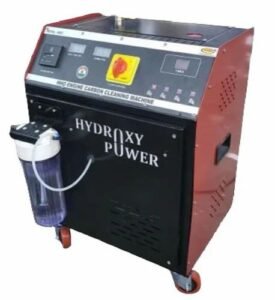
Stage 2: Component Selection
The manufacturer selects the components required for the machine.
Important components can include:
- Electrolysis cell
- Water tank
- Pump
- Electrical components
- Control board
- Display
- Switches
- Hoses
- Connectors
The quality of these components can influence machine reliability.
Stage 3: Body Fabrication
The machine body is fabricated according to the design.
Depending on the manufacturer, the body may use:
- Mild steel
- Stainless steel
- Metal panels
- Powder-coated structures
- Other suitable materials
The body should provide adequate protection to internal components.
Stage 4: Electrical Assembly
Electrical components are installed and connected.
This is a critical stage because improper wiring can create operational and safety problems.
A professional manufacturer should have appropriate testing procedures for electrical systems.
Stage 5: Gas Generation System Assembly
The electrolysis and gas-generation components are installed.
The manufacturer should verify that the system operates according to the intended specifications.
Stage 6: Control Panel Installation
The control panel may include:
- Digital display
- Timer
- Start/stop controls
- Indicators
- Touchscreen
- Alarm functions
The complexity depends on the machine model.
Stage 7: Testing
Before dispatch, the machine should undergo functional testing.
The manufacturer may check:
- Electrical operation
- Gas generation
- Flow
- Control functions
- Leakage
- Safety systems
- Display functions
Stage 8: Final Inspection
The completed machine should be inspected before packaging.
This is the final opportunity to identify manufacturing or assembly issues.
Engine Decarbonizing Machine Manufacturer: Quality Control
Quality control is one of the biggest differences between a professional manufacturer and a basic equipment assembler.
A proper quality-control process should cover the entire machine.
Electrical Quality
Check voltage, wiring, switches and electrical protection.
Mechanical Quality
Inspect body construction, wheels, fittings and mounting.
Gas System Quality
Check hoses, connections and gas-generation components.
Control System Quality
Verify timers, displays, buttons and automatic functions.
Safety Quality
Check relevant safety mechanisms before dispatch.
A buyer should feel comfortable asking the manufacturer:
“How do you test the machine before dispatch?”
The answer can tell you a lot about the company’s manufacturing standards.
Engine Decarbonizing Machine Manufacturer and Product Testing
Testing becomes especially important when the machine is intended for commercial workshop use.
A manufacturer may test the equipment under operating conditions before dispatch.
Important tests can include:
- Startup test
- Continuous operation test
- Gas-generation test
- Flow test
- Electrical test
- Control-panel test
- Safety test
- Leakage inspection
Ask whether the manufacturer provides a test report or inspection record when applicable.
Why Machine Capacity Should Match Your Workshop
Not every workshop needs the same machine.
This is one of the most important points when choosing an Engine Decarbonizing Machine Manufacturer.
Imagine a small garage that mainly services:
- Hatchbacks
- Compact sedans
- Small SUVs
Buying an expensive heavy-duty machine may not make financial sense.
Now consider a workshop that services:
- Large SUVs
- Premium cars
- Diesel vehicles
- Commercial vehicles
That workshop may require a higher-capacity system.
Therefore, capacity should be selected based on your customer profile.
Engine Decarbonizing Machine for Small Cars
Small-car workshops can focus on compact and mid-range machines.
The important factors may be:
- Affordable investment
- Compact size
- Simple operation
- Suitable engine capacity
- Low maintenance
- Warranty
- Spare parts
A smaller machine can be a sensible starting point if the workshop’s customer base does not require heavy-duty equipment.
Engine Decarbonizing Machine for SUVs
SUVs can have larger engine capacities than many small passenger cars.
If your workshop regularly services SUVs, check the maximum engine capacity carefully.
You should also verify:
- Petrol compatibility
- Diesel compatibility
- Gas output
- Recommended operating procedure
- Machine warranty
Don’t assume that every machine marketed as a “car decarbonizing machine” is suitable for every SUV.
Engine Decarbonizing Machine for Premium Vehicles
Premium vehicles can use sophisticated engine-management and emissions systems.
Therefore, workshop technicians should follow the appropriate operating procedure carefully.
Before performing any service, technicians should inspect the vehicle and confirm that the process is suitable.
A professional workshop should never promise that carbon cleaning will solve every performance problem.
Engine Decarbonizing Machine for Diesel Vehicles
Diesel vehicles are an important segment for many Indian workshops.
If you service diesel cars, SUVs or commercial vehicles, confirm that the machine is suitable for the relevant diesel applications.
Ask the manufacturer specifically:
“Is this machine recommended for diesel engines?”
Don’t rely solely on a general product description.https://shivshaktigarage.com/complete-car-workshop-setup-in-india/
Engine Decarbonizing Machine for Commercial Vehicles
Commercial vehicles require different workshop equipment from passenger cars.
Trucks and buses can have significantly larger engines.
A heavy-duty workshop should therefore look for a manufacturer that offers appropriate high-capacity equipment.
Important questions include:
- Maximum engine capacity
- Gas output
- Operating cycle
- Diesel compatibility
- Safety features
- Warranty
- Spare parts
- Technical support
6000cc Engine Decarbonizing Machine
A 6000cc-class machine can be an attractive option for many multi-brand workshops.
Some machines in the Indian market are marketed for engines up to 6000cc and include features such as automatic operation, touchscreen controls and printer functionality. (tradeindia.com)
The benefit of this type of machine is broader vehicle coverage.
It can potentially be useful for workshops handling:
- Cars
- SUVs
- Petrol engines
- Diesel engines
- Premium vehicles
However, always verify the manufacturer’s approved applications.
7500cc Engine Decarbonizing Machine
For workshops handling larger engines, a 7500cc-class system can offer additional flexibility.
This may be useful for:
- Large SUVs
- Premium vehicles
- Larger diesel engines
- Selected commercial applications
A manufacturer should clearly provide the recommended application range.
Heavy-Duty Engine Decarbonizing Machine
Heavy-duty machines are designed for applications beyond ordinary passenger vehicles.
Depending on the model, they may be intended for:
- Trucks
- Buses
- Heavy commercial vehicles
- Large diesel engines
- Industrial engines
The investment is generally higher because the equipment must be designed for larger applications.
If your business focuses on commercial vehicles, ask specifically for a heavy-duty model.
HHO Engine Decarbonizing Machine Manufacturer
HHO technology is one of the commonly marketed categories of engine carbon-cleaning equipment.
A manufacturer specializing in HHO equipment should be able to explain:
- Electrolysis process
- Gas generation
- Cell technology
- Water requirements
- Gas output
- Safety precautions
- Maintenance requirements
A buyer should understand the technology before purchasing the machine.
What Is the Role of the Electrolysis Cell?
The electrolysis cell is an important component in an HHO-based system.
It is used to generate the gas through an electrolysis process.
Because the cell plays an important role, ask the manufacturer about:
- Cell construction
- Expected service life
- Maintenance
- Replacement availability
- Warranty
- Recommended water quality
A manufacturer should be able to provide clear technical information.
Water Quality and Machine Operation
Water quality can affect equipment performance depending on the machine design.
Always follow the manufacturer’s recommendation regarding water.
Some systems may specify particular water-quality requirements.
Do not automatically assume that any type of water is appropriate.
Ask:
“Which water should be used in this machine?”
This simple question can prevent unnecessary maintenance problems.
Gas Output of an Engine Decarbonizing Machine
Gas output is another specification buyers commonly compare.
You may see machines advertised with different outputs, such as:
- 500 L/h
- 700 L/h
- 1000 L/h
- Higher outputs
These numbers should not be considered independently.
A machine with higher gas output isn’t automatically better.
You should compare:
Gas Output + Engine Capacity + Technology + Safety + Reliability
together.
Automatic Engine Decarbonizing Machine
Automatic machines can simplify operation.
Depending on the model, automation may include:
- Digital timer
- Automatic cycle
- Touchscreen
- Automatic shutdown
- Alarm
- Digital indicators
- Printer
For a busy workshop, these features can improve convenience.
However, automation does not replace technician knowledge.
The operator still needs to understand the vehicle and the machine.
Manual vs Automatic Engine Decarbonizing Machine
Both categories have their place.
Manual Machine
Potential advantages:
- Lower cost
- Simple operation
- Fewer electronic components
- Suitable for smaller workshops
Automatic Machine
Potential advantages:
- Easier operation
- Timer control
- Better process consistency
- Digital interface
- Additional documentation features
The right option depends on your budget and daily workload.
Touchscreen Engine Decarbonizing Machine
Touchscreen controls are increasingly found in professional workshop equipment.
A touchscreen can make the interface easier to understand.
It may allow technicians to:
- Select a program
- Set time
- Monitor operation
- View status
- Control functions
However, don’t purchase a machine only because it has a touchscreen.
First check its core technology and reliability.
Printer Function
Some professional machines include printer functions.
This can be useful for workshops that want to provide customers with service documentation.
A printed service record may include information such as:
- Service date
- Vehicle information
- Operating cycle
- Machine parameters
The exact functions depend on the machine.
Safety Features in Engine Decarbonizing Equipment
Safety is particularly important for HHO/hydrogen-containing systems.
Hydrogen is highly flammable.
Therefore, the equipment should be operated according to strict manufacturer instructions.
Important safety considerations include:
- Proper ventilation
- Electrical protection
- Gas connection inspection
- Correct hoses
- Proper fittings
- No unauthorized modifications
- Trained operators
- Correct shutdown procedure
The manufacturer should explain all safety features during installation or training.
Engine Decarbonizing Machine Manufacturer: Operator Training
Training is an important part of equipment ownership.
A professional manufacturer may provide training covering:
Machine Startup
How to start the equipment safely.
Water Filling
How to fill and maintain the water system.
Vehicle Connection
How to connect the machine according to the approved procedure.
Operating Cycle
How to select or set the appropriate cycle.
Shutdown
How to stop the machine correctly.
Maintenance
How to perform routine checks.
Troubleshooting
How to identify common problems.
Training can help prevent operator errors and unnecessary machine downtime.
Installation Support From the Manufacturer
Ask whether the manufacturer provides installation support.
This may include:
- Machine placement
- Electrical connection guidance
- Initial setup
- Water-system setup
- Hose connection
- Demonstration
- Technician training
If onsite installation is not available, ask whether video or remote support is provided.
Warranty: What Buyers Should Know
A warranty is more than a number of years.
You need to know exactly what the warranty covers.
Ask the manufacturer:
What is the warranty period?
Which components are covered?
What parts are excluded?
Is labour included?
Is transportation included?
How quickly are warranty claims processed?
A clear warranty policy is a positive sign.
Spare Parts Availability
Imagine your machine stops working because a small component fails.
If the manufacturer has that component in stock, the machine may be repaired quickly.
If the part has to be imported or specially manufactured, downtime can be longer.
Ask your manufacturer about the availability of:
- Hoses
- Connectors
- Filters
- Pumps
- Electrolysis cells
- Control boards
- Displays
- Electrical components
- Switches
This is especially important for high-volume workshops.
After-Sales Service
After-sales service can determine the actual value of the machine.
A professional manufacturer should have a process for handling:
- Technical queries
- Warranty claims
- Spare-parts requests
- Installation
- Maintenance
- Troubleshooting
Before buying, ask:
“If my machine stops working after one year, who will support me?”
The answer matters.https://g.page/r/CXBa8k4gljxAEBM/review
Engine Decarbonizing Machine Manufacturer and Customization
Not every workshop has identical requirements.
Some businesses may require customized machines.
Possible customization options can include:
- Company logo
- Branding
- Machine colour
- Control panel design
- Hose configuration
- Machine capacity
- Accessories
- Packaging
Customization is particularly useful for dealers and businesses ordering multiple machines.
Private Label Manufacturing
Private-label manufacturing is another opportunity for distributors.
A manufacturer produces the equipment while the distributor sells it under its own brand.
This can be attractive for:
- Garage equipment dealers
- Regional distributors
- Automotive equipment companies
- Exporters
- Workshop chains
Before signing an OEM/private-label agreement, clearly define warranty responsibilities and technical support.
Engine Decarbonizing Machine Manufacturer for Dealers
Dealers need more than competitive pricing.
A good manufacturing partner should provide:
- Dealer price
- Consistent quality
- Regular stock
- Product catalogue
- Product images
- Technical specifications
- Training
- Warranty support
- Spare parts
- Marketing assistance
A dealer’s reputation depends partly on the quality of the products sold.
Therefore, manufacturer selection is extremely important.
Engine Decarbonizing Machine Manufacturer for Workshop Chains
Large workshop chains may need multiple machines.
In such cases, consistency becomes important.
Imagine having ten branches.
If every branch uses a different machine, technician training and maintenance can become complicated.
Using standardized equipment can simplify:
- Training
- Maintenance
- Spare parts
- Service procedures
- Warranty management
A manufacturer capable of supplying multiple locations can be valuable for workshop chains.
Engine Decarbonizing Machine Manufacturer for Exporters
Export businesses need additional support.
Ask the manufacturer about:
- Export packaging
- Shipping dimensions
- Electrical specifications
- Documentation
- Product manuals
- Country-specific requirements
- Warranty
- Spare parts
Different countries can have different electrical and regulatory requirements.
These should be confirmed before shipment.
How Much Does an Engine Decarbonizing Machine Cost?
There is no single price applicable to every machine.
The price depends on:
- Engine capacity
- Gas output
- Technology
- Automation
- Build quality
- Accessories
- Warranty
- Manufacturer
- Customization
Current Indian listings demonstrate a wide price range. Basic machines can be listed in the tens of thousands of rupees, while professional and higher-capacity machines can reach several lakh rupees. (tradeindia.com)
For example, current listings include 6000cc-class automatic HHO machines around the ₹1.75 lakh range, while other professional systems are listed at different price points. (nitrogeninflator.in)
Therefore, buyers should request a current quotation instead of relying on an old online price.
What Should Be Included in Your Quotation?
When requesting a quotation from an Engine Decarbonizing Machine Manufacturer, ask for a complete commercial offer.
It should ideally mention:
- Machine model
- Engine capacity
- Gas output
- Power requirement
- Machine dimensions
- Accessories
- Warranty
- Installation
- Training
- GST
- Transportation
- Delivery time
- Payment terms
This makes supplier comparison easier.
Why the Cheapest Machine Is Not Always the Best
Let’s take a simple example.
Machine A
₹80,000
Basic controls
Limited warranty
Limited accessories
Machine B
₹1,20,000
Higher capacity
Better controls
More accessories
Better warranty
Technician training
Machine A looks cheaper.
But if Machine B offers better reliability and service support, the additional investment may provide greater long-term value.
The correct question is:
“What am I getting for my money?”
not simply:
“What is the lowest price?”
Total Cost of Ownership
The real cost of equipment includes more than the purchase price.
Consider:
Machine Price
GST
Transportation
Installation
Accessories
Maintenance
Spare Parts
Downtime
=
Total Cost of Ownership
This is the number that matters to a professional workshop.
Engine Decarbonizing Machine Business Opportunity
An engine decarbonizing machine can create an additional service opportunity for automobile workshops.
Suppose your workshop already provides:
- General servicing
- Wheel alignment
- Wheel balancing
- Tyre changing
- Car washing
You can potentially add engine carbon-cleaning as another service.
The major advantage is that you already have customers.
You don’t necessarily need to acquire a completely new customer for every service.
Example of Potential Revenue
Suppose your workshop charges:
₹1,500 per carbon-cleaning service
If you perform five services per week:https://shivshaktigarage.com/workshop-wheel-balancing-setup/
5 × ₹1,500 = ₹7,500 per week
Approximately:
₹30,000 per month
If you perform ten services per week:
10 × ₹1,500 = ₹15,000 per week
Approximately:
₹60,000 per month
These figures are examples only.
Actual revenue depends on:
- Location
- Competition
- Customer demand
- Service price
- Workshop reputation
- Vehicle type
- Marketing
Engine Decarbonizing Machine ROI
Suppose the complete machine investment is:
₹1,50,000
If the machine contributes an average of ₹15,000 per month toward recovering its investment:
₹1,50,000 ÷ ₹15,000 = 10 months
This is a simple payback calculation.
Actual ROI can be different because you need to account for:
- Technician cost
- Electricity
- Water
- Maintenance
- Marketing
- Taxes
- Discounts
- Downtime
Always calculate ROI using your real workshop figures.
How a Manufacturer Can Help Improve ROI
A good manufacturer can help you understand:
- Recommended machine capacity
- Operating procedure
- Service time
- Maintenance
- Accessories
- Technician training
This can help you use the machine more efficiently.
However, customer acquisition remains the responsibility of the workshop.
How an Engine Decarbonizing Machine Manufacturer Can Support Dealers
Manufacturers can help dealers by providing:
- Product photographs
- Technical specifications
- Product videos
- Brochures
- Installation guides
- Training
- Warranty documents
Dealers can then use these materials for:
- Websites
- Google Ads
- Meta Ads
- YouTube
- Product catalogues
This can make product marketing easier.
Importance of Original Product Images
If you are a manufacturer or dealer, use your own machine photographs.
Take photographs of:
- Front
- Back
- Side
- Control panel
- Internal components where appropriate
- Accessories
- Machine in operation
- Machine connected to a vehicle
Original images can help customers understand the actual product.
Product Video for Engine Decarbonizing Equipment
A professional product video should show the machine clearly.
A good video can include:
- Machine introduction
- Technical specifications
- Control panel
- Water system
- Operating process
- Safety features
- Workshop application
- Contact information
Keep the explanation simple and factual.
Engine Decarbonizing Machine Manufacturer: Building Customer Trust
Trust is extremely important in machinery sales.
Customers may invest thousands or lakhs of rupees.
Therefore, your website should clearly show:
- Company information
- Product specifications
- Real photographs
- Warranty
- Contact details
- Address
- Customer support
- Product videos
- Frequently asked questions
Avoid making unrealistic claims.
Avoid Unrealistic Marketing Claims
A professional manufacturer should avoid claims such as:
- “Guaranteed mileage increase”
- “Engine becomes brand new”
- “100% engine repair”
- “Every engine problem disappears”
- “Guaranteed fuel savings”
- “No diagnosis required”
Engine performance depends on many factors.
Marketing should be based on realistic and supportable information.
Engine Decarbonizing Machine and Professional Workshop Services
A workshop can integrate carbon-cleaning services into its existing workflow.
For example:
Vehicle Reception
↓
Initial Inspection
↓
Diagnosis
↓
General Service
↓
Engine Carbon Cleaning Where Appropriate
↓
Wheel Alignment / Balancing
↓
Final Inspection
↓
Customer Delivery
The exact workflow depends on the workshop.
Complete Workshop Equipment
An engine decarbonizing machine is only one part of a professional garage.
Other equipment may include:
Vehicle Lifting
- Two-post lift
- Scissor lift
- Washing lift
- Four-post lift
Wheel Service
- Wheel alignment machine
- Wheel balancer
- Tyre changer
Washing
- Pressure washer
- Foam machine
- Vacuum cleaner
Air System
- Air compressor
Body Repair
- Dent puller
- Welding machine
- Crash repair system
Painting
- Car paint booth
Engine Service
- Engine decarbonizing machine
- Diagnostic equipment
- Battery equipment
A complete workshop should be planned around actual customer requirements.
Engine Decarbonizing Machine Manufacturer: Maintenance Support
A manufacturer should ideally provide maintenance instructions with the machine.
Routine checks can include:
Daily
- Water level
- Hoses
- Connectors
- Electrical cables
- Control panel
Weekly
- Machine body
- Fittings
- Water system
- Electrical connections
Periodic
- Electrolysis components
- Filters
- Pumps
- Hoses
- Control systems
Always follow the specific manufacturer’s maintenance schedule.
What Happens If the Machine Stops Working?
Before buying, ask the manufacturer about the troubleshooting process.
A good support system may include:
Step 1
Call technical support.
Step 2
Describe the problem.
Step 3
Provide photographs or video if requested.
Step 4
Technician identifies the likely cause.
Step 5
Replacement part is dispatched if required.
Step 6
Technician provides installation instructions or onsite support where available.
A structured support process can minimize downtime.https://www.indiamart.com/shivshaktigarageequipments/profile.html?srsltid=AfmBOopZqqCHhj9EiXjsptj-uWPQQkAiHXt0OffGdmmddJOy9kw1PqPj
Engine Decarbonizing Machine Manufacturer: Final Selection Criteria
Before choosing your manufacturer, score each company on:
| Selection Factor | Importance |
|---|---|
| Manufacturing Quality | Very High |
| Machine Capacity | Very High |
| Technology | Very High |
| Safety | Very High |
| Warranty | High |
| Spare Parts | High |
| After-Sales Support | Very High |
| Technician Training | High |
| Price | High |
| Customization | Medium/High |
| Delivery Time | High |
| Customer Reputation | High |
Don’t make the decision based on price alone.
Questions to Ask Before Buying
Here is a practical list you can send directly to any manufacturer:
1. Are you the actual manufacturer?
2. Where is the machine manufactured?
3. What is the maximum engine capacity?
4. What is the gas output?
5. Is it suitable for petrol and diesel engines?
6. What technology is used?
7. What safety features are included?
8. What accessories are included?
9. What is the warranty period?
10. Are spare parts available?
11. Is installation included?
12. Is technician training included?
13. What is the delivery time?
14. Is GST included?
15. Is transportation included?
16. What is the final delivered price?
17. Can you provide a demonstration?
18. Can you provide references or customer installations?
These questions will help you compare manufacturers more professionally.
How to Choose the Right Engine Decarbonizing Machine Manufacturer
Choosing an Engine Decarbonizing Machine Manufacturer is a decision that can directly affect your workshop’s productivity, service quality and long-term investment.
There are many companies selling engine carbon-cleaning equipment, but every company may not offer the same level of manufacturing quality, technical support or after-sales service.
Before making a final decision, consider the following points.
Manufacturing Experience
Find out how long the company has been manufacturing automotive workshop equipment.
Product Range
A manufacturer with a broader range of garage equipment may understand workshop requirements better.
Machine Quality
Look at the construction, internal components, control system and overall finish.
Technical Support
Ask how the company handles technical questions and machine problems.
Warranty
Understand exactly what is covered.
Spare Parts
Check whether replacement parts are readily available.
Training
Ask whether technicians receive operating and safety training.
Delivery
Confirm the expected delivery time.
Customer Support
Find out how warranty and service requests are handled after installation.
A machine can be an excellent investment when all these factors work together.
Why Buying Directly From a Manufacturer Can Be Useful
When you purchase directly from an Engine Decarbonizing Machine Manufacturer, communication can sometimes be more straightforward.
Potential benefits include:
- Direct technical information
- Product customization
- Better understanding of specifications
- Direct warranty communication
- Spare-parts availability
- Bulk-order discussions
- OEM possibilities
- Dealer opportunities
However, buyers should still evaluate the actual manufacturer carefully.
Direct purchasing does not automatically guarantee better quality.
How to Verify a Manufacturer
Before placing an order, do some basic verification.
Check the Company Website
Look for:
- Company information
- Product range
- Address
- Contact details
- Product specifications
- Warranty information
- Manufacturing information
Check Product Photographs
Look for original photographs rather than only generic images.
Ask for a Factory or Workshop Video
If possible, ask for a video showing the manufacturing or assembly facility.
Request Product Demonstration
A live demonstration can answer many questions.
Ask for Customer References
If available, speak with existing customers.
Check the Manufacturer’s Product Range
A company that manufactures several categories of garage equipment may be able to support your workshop more broadly.
For example, you may need:
- Engine Decarbonizing Machine
- Two Post Lift
- Car Washing Lift
- Scissor Lift
- Wheel Alignment Machine
- Wheel Balancer
- Tyre Changer
- Car Paint Booth
- Air Compressor
- Foam Machine
- Vacuum Cleaner
Working with one experienced equipment company can sometimes simplify purchasing and service coordination.
Engine Decarbonizing Machine Manufacturer for New Workshop Owners
If you are opening a new automobile workshop, it is easy to get excited and purchase too much equipment at once.
This can put unnecessary pressure on your budget.
A better strategy is to divide equipment into categories.
Phase 1: Essential Equipment
Start with equipment that generates regular demand.
For example:
- Two-post car lift
- Air compressor
- Washing equipment
- Basic service tools
- Tyre changer
- Wheel balancer
Phase 2: Advanced Equipment
Once customer traffic increases, consider:
- 3D wheel alignment machine
- Scissor lift
- Engine decarbonizing machine
- Advanced diagnostic equipment
Phase 3: Specialized Equipment
Depending on the business:
- Car paint booth
- Dent repair equipment
- Crash repair system
- Heavy-duty equipment
This approach allows you to grow your workshop according to actual demand.
Engine Decarbonizing Machine for Established Workshops
Established workshops have an advantage because they already have customers.
If customers regularly visit for:
- General service
- Oil changes
- Wheel alignment
- Tyre service
- Washing
- Repairs
you can introduce additional services when appropriate.
The machine can therefore become an extension of your existing service portfolio.
How to Introduce a New Carbon Cleaning Service
Don’t simply put a machine in the workshop and wait for customers.
Create awareness.
Step 1: Train Your Technicians
Make sure your team understands the equipment.
Step 2: Create a Service Procedure
Standardize inspection and operation.
Step 3: Inform Existing Customers
Tell customers that your workshop now offers the service.
Step 4: Use Educational Marketing
Explain what the service does.
Step 5: Collect Customer Feedback
Use genuine feedback to improve your service.
Engine Carbon Cleaning Service Pricing
Pricing depends on several factors.
Consider:
- Vehicle type
- Engine size
- Local competition
- Workshop reputation
- Technician cost
- Machine investment
- Service time
- Location
Don’t copy a competitor’s price blindly.
Calculate your own costs.
How to Calculate Your Minimum Service Price
Suppose your monthly equipment-related expenses are:
- Machine depreciation/finance: ₹8,000
- Technician allocation: ₹7,000
- Electricity and water: ₹2,000
- Maintenance: ₹2,000
- Marketing: ₹3,000
Total:
₹22,000 per month
If you expect to perform 40 services per month:
₹22,000 ÷ 40 = ₹550 cost per service
You then need to add your desired margin.
This is only an example.
Your actual calculation should use your real expenses.
Engine Decarbonizing Machine ROI Example
Let’s consider a simple example.
Machine investment:
₹1,50,000
Average service price:https://www.justdial.com/Delhi/Shiv-Shakti-Garage-Equipments-Vishnu-Garden/011PXX11-XX11-250718154737-U9U2_BZDET
₹1,500
Services per month:
50
Gross monthly service revenue:
50 × ₹1,500 = ₹75,000
Gross annual revenue:
₹75,000 × 12 = ₹9,00,000
This is gross revenue, not net profit.
You must subtract:
- Technician wages
- Electricity
- Water
- Maintenance
- Marketing
- Taxes
- Discounts
- Other operating costs
The example demonstrates how utilization can influence investment recovery.
What If Your Workshop Gets Only 20 Services Per Month?
At ₹1,500 per service:
20 × ₹1,500 = ₹30,000 gross monthly revenue
Annual gross revenue:
₹30,000 × 12 = ₹3,60,000
Again, this is not profit.
But even 20 services per month may make the machine useful depending on your investment and operating costs.
The key question is:
How many services can your workshop realistically generate?
Why Customer Demand Matters More Than Machine Capacity
Some buyers think:
“If I purchase a higher-capacity machine, I will automatically make more money.”
That isn’t necessarily true.
A 20,000cc machine sitting unused is less valuable than a suitable 6000cc machine that performs several services every day.
Therefore:
Demand > Capacity
Choose capacity based on your business.
Engine Decarbonizing Machine Manufacturer: Commercial Buying Checklist
Before making your final decision, prepare a comparison sheet.
| Factor | Requirement |
|---|---|
| Manufacturer | Verified |
| Engine Capacity | ___cc |
| Technology | ___ |
| Gas Output | ___ |
| Petrol Compatibility | Yes/No |
| Diesel Compatibility | Yes/No |
| Display | Yes/No |
| Automatic Timer | Yes/No |
| Touchscreen | Yes/No |
| Printer | Yes/No |
| Safety Features | ___ |
| Warranty | ___ |
| Installation | Yes/No |
| Training | Yes/No |
| Spare Parts | Yes/No |
| Delivery | ___ days |
| GST | Included/Extra |
| Transportation | Included/Extra |
| Final Price | ₹___ |
This simple table can prevent many purchasing mistakes.
Engine Decarbonizing Machine Manufacturer: Questions About Warranty
Don’t just ask:
“How many years warranty?”
Ask detailed questions.
Is the entire machine covered?
Some warranties may cover selected components.
Are electrical parts covered?
Ask specifically.
Is the electrolysis system covered?
Confirm this in writing.
Is labour included?
This can vary.
Is transportation included?
Ask before purchasing.
What happens after warranty?
Find out the normal repair and spare-parts process.
A clear warranty is much better than a vague promise.
Why Spare Parts Matter
A commercial machine is expected to operate repeatedly.
Eventually, some components may require replacement.
A good manufacturer should have a system for supplying parts.
Important components may include:
- Hoses
- Connectors
- Pumps
- Filters
- Electrolysis cells
- Control boards
- Displays
- Electrical switches
- Other machine-specific components
Ask for approximate spare-part costs before purchasing.
Engine Decarbonizing Machine Manufacturer: Service Network
A manufacturer with a good service network can provide peace of mind.
Ask:
Where is your nearest service team?
Do you provide onsite service?
Can technicians provide remote troubleshooting?
How quickly are spare parts dispatched?
Do you provide installation support?
These questions become especially important when purchasing machinery for commercial use.
Machine Demonstration Before Purchase
A demonstration is one of the best ways to evaluate equipment.
During the demonstration, observe:
- Machine startup
- Display operation
- Water system
- Gas-generation system
- Controls
- Hoses
- Connections
- Noise
- Safety features
- Shutdown procedure
Ask the technician to explain the machine step by step.
If the manufacturer is unable or unwilling to explain basic machine operation, consider that a warning sign.
Engine Decarbonizing Machine Manufacturer: Product Documentation
Professional equipment should come with appropriate documentation.
Ask for:
- User manual
- Technical specifications
- Warranty card
- Installation instructions
- Maintenance instructions
- Safety instructions
- Spare-parts information
Good documentation helps technicians operate the equipment correctly.
Digital Documentation
Manufacturers can also provide:
- PDF manuals
- Installation videos
- Maintenance videos
- Troubleshooting guides
- Product brochures
These resources can be particularly useful when a workshop has multiple technicians.
Engine Decarbonizing Machine and Workshop Branding
If you own a premium workshop, presentation matters.
A clean, professionally installed machine can contribute to the overall image of the workshop.
Consider:
- Proper machine placement
- Clean service area
- Product information board
- Service price board
- Technician uniform
- Customer explanation
- Service report
The equipment should look like part of a professional service process.
Customer Communication During Carbon Cleaning
Before beginning the service, explain:
What is being done?
Why is it being recommended?
How long will it take?
What is included in the service?
What should the customer realistically expect?
This creates transparency.
Avoid making guaranteed performance claims.
Engine Decarbonizing Machine Manufacturer and Ethical Marketing
Good manufacturers and workshops should avoid exaggerated claims.
Avoid statements such as:
“Guaranteed 30% mileage improvement.”
“Engine becomes completely new.”
“Every engine problem will be solved.”
“No diagnosis required.”
Instead, use factual language.
For example:
“Engine carbon-cleaning service designed to assist with carbon-deposit-related maintenance applications, subject to vehicle condition and proper procedure.”
This is more professional.
Can Carbon Cleaning Replace Engine Repair?
No.
This distinction should appear clearly on your website.
Carbon cleaning cannot automatically fix:
- Mechanical wear
- Broken components
- Low compression
- Major oil consumption
- Faulty injectors
- Turbocharger failure
- Damaged valves
- Electrical faults
- Sensor problems
A proper diagnosis should determine the correct repair.
Engine Decarbonizing Machine Manufacturer and Vehicle Diagnosis
A professional service procedure should start with vehicle inspection.
The technician can consider:
- Customer complaint
- Vehicle history
- Mileage
- Fuel type
- Maintenance history
- Warning lights
- Diagnostic information
- Engine condition
Only then should the appropriate service be recommended.
This is a better approach than selling the same procedure to every vehicle.
Engine Decarbonizing Machine Manufacturer for Modern Workshops
Modern workshops increasingly combine mechanical equipment with digital tools.
A professional workshop may use:
- Diagnostic scanner
- Wheel alignment machine
- Digital wheel balancer
- Tyre changer
- Engine decarbonizing machine
- Digital inspection tools
- Customer management software
The objective is to provide faster and more organized service.
Complete Garage Setup With Engine Decarbonizing Equipment
If you are planning a complete workshop, your equipment selection can be divided into areas.
Service Bay
- Two-post lift
- Service tools
- Diagnostic equipment
Washing Bay
- Washing lift
- Pressure washer
- Foam machine
- Vacuum cleaner
Wheel Bay
- Tyre changer
- Wheel balancer
- Wheel alignment machine
Engine Service Area
- Engine decarbonizing machine
- Diagnostic equipment
Body Repair Area
- Dent puller
- Welding equipment
- Crash repair system
Painting Area
- Car paint booth
Utility Area
- Air compressor
- Tool storage
This layout can help create a more organized workflow.
Why Workshop Layout Matters
A poorly planned workshop can waste time.
For example, if the wheel balancer is located far from the tyre changer, technicians may need to move wheels unnecessarily.
Similarly, if the engine decarbonizing machine is positioned where vehicle access is difficult, service time can increase.
Before purchasing equipment, consider:
- Vehicle movement
- Technician movement
- Electrical supply
- Ventilation
- Safety
- Storage
- Customer access
Good layout planning can improve productivity.
Engine Decarbonizing Machine Manufacturer: Future Growth
When choosing a manufacturer, think about your future business.
You may start with one machine.
Later, you may need:
- Higher capacity
- Additional machines
- Dealer supply
- Workshop chain equipment
- OEM products
- Spare parts
Choosing a manufacturer capable of supporting your growth can be valuable.
Manufacturer Relationship Over the Long Term
A good manufacturer relationship can provide:
- New product information
- Technical updates
- Spare parts
- Warranty support
- Training
- Equipment upgrades
Instead of thinking only about today’s purchase, consider your next three to five years of workshop growth.
Warning Signs When Choosing a Manufacturer
Be careful if a seller:
- Cannot explain the technology
- Refuses to provide specifications
- Gives only verbal warranty promises
- Cannot explain spare-parts availability
- Avoids product demonstrations
- Uses misleading performance claims
- Cannot identify the actual manufacturer
- Gives unclear pricing
- Changes specifications after ordering
A little research before purchase can save significant trouble later.
Engine Decarbonizing Machine Manufacturer: Final Buying Checklist
Before placing your purchase order, review this checklist.
Manufacturer
- ✓ Manufacturer identity verified
- ✓ Manufacturing location checked
- ✓ Product range reviewed
- ✓ Customer references considered
- ✓ Technical support confirmed
Machine
- ✓ Correct engine capacity
- ✓ Petrol compatibility confirmed
- ✓ Diesel compatibility confirmed
- ✓ Technology understood
- ✓ Gas output checked
- ✓ Power requirement checked
- ✓ Safety features checked
- ✓ Build quality inspected
Features
- ✓ Digital display
- ✓ Timer
- ✓ Automatic controls if required
- ✓ Touchscreen if required
- ✓ Printer if required
- ✓ Appropriate accessories
Support
- ✓ Warranty confirmed
- ✓ Spare parts available
- ✓ Installation confirmed
- ✓ Technician training confirmed
- ✓ After-sales service confirmed
Commercial
- ✓ Machine price
- ✓ GST
- ✓ Transportation
- ✓ Installation
- ✓ Accessories
- ✓ Delivery time
- ✓ Payment terms
- ✓ Final delivered price
Why Shiv Shakti Garage Equipments Is a Practical Choice for Workshop Equipment
For workshop owners looking beyond a single machine, Shiv Shakti Garage Equipments can be positioned as a complete garage equipment partner.
The company offers solutions across several workshop categories, allowing customers to plan their automobile workshop equipment from a broader perspective.
Depending on your requirements, equipment categories can include:
- Engine Decarbonizing Machine
- Two Post Car Lift
- Car Washing Lift
- Car Washing Scissor Lift
- 3D Wheel Alignment Machine
- Digital Wheel Balancer
- Tyre Changer Machine
- Car Paint Booth
- Air Compressor
- Foam Machine
- Vacuum Cleaner
- Car Dry Cleaning Machine
- Complete Garage Workshop Equipment
For a new workshop, buying equipment based on a complete plan can be more practical than selecting individual machines without considering the overall workflow.
Complete Workshop Setup in India
If you are planning a new automobile workshop, start by identifying your target market.
Small Car Workshop
Focus on:
- Two-post lift
- Compressor
- Basic washing equipment
- Wheel equipment
- Basic diagnostic tools
Multi-Brand Workshop
Consider:
- Multiple lifts
- Wheel alignment
- Wheel balancing
- Tyre changing
- Washing equipment
- Engine carbon cleaning
- Diagnostic equipment
Premium Workshop
Consider adding:
- Advanced alignment
- Professional washing equipment
- Paint booth
- Body repair equipment
- Engine service equipment
- Customer waiting area
Commercial Vehicle Workshop
Focus on:
- Heavy-duty lifts
- Heavy-duty tyre equipment
- Large compressors
- Heavy-duty wheel equipment
- Appropriate engine service equipment
Your equipment should always match your business model.
How to Request a Quotation From a Manufacturer
Instead of sending:
“Engine decarbonizing machine price?”
send a detailed enquiry.
For example:
I operate a multi-brand automobile workshop and need an engine decarbonizing machine for petrol and diesel vehicles. Please recommend a suitable model and provide engine capacity, gas output, power requirement, accessories, warranty, installation, training, GST, transportation and final delivered price.
This gives the manufacturer enough information to recommend an appropriate machine.
What Information Should You Give the Manufacturer?
Tell them:
- Workshop location
- Vehicle types
- Petrol/diesel requirement
- Maximum engine capacity
- Expected daily workload
- Preferred features
- Budget range
- Installation requirement
The more information you provide, the more useful the quotation will be.
Engine Decarbonizing Machine Manufacturer: Final Conclusion
Selecting the right Engine Decarbonizing Machine Manufacturer is not simply about finding a company that sells a machine.
It is about finding a manufacturing partner that can support your workshop before, during and after the purchase.
A professional manufacturer should be able to provide:
Reliable Manufacturing
Suitable Technology
Correct Engine Capacity
Quality Components
Safety Features
Clear Specifications
Warranty
Spare Parts
Installation
Technician Training
Technical Support
After-Sales Service
Competitive Total Cost
When these factors are considered together, you can make a much more informed investment.
Don’t choose an equipment manufacturer simply because the quotation is the lowest.
Don’t choose a machine simply because it has the highest engine capacity.
And don’t believe unrealistic claims about guaranteed engine performance.
Instead, focus on the complete value of the equipment.
Understand your customers.
Understand the vehicles you service.
Choose the correct engine capacity.
Compare manufacturers.
Request a demonstration.
Check warranty and spare parts.
Calculate your expected ROI.
Then make your final decision.
For a small workshop, a compact machine may provide excellent value.
For a multi-brand workshop, a professional higher-capacity machine may be more appropriate.
For commercial-vehicle applications, heavy-duty equipment may be required.
For dealers and distributors, consistent manufacturing quality, dealer support, OEM options and spare-parts availability may become the most important factors.
The right manufacturer should grow with your business.
Looking for an Engine Decarbonizing Machine Manufacturer?
If you are looking for an Engine Decarbonizing Machine Manufacturer for your automobile workshop, service center, dealership, garage-equipment dealership or complete workshop setup, request a detailed quotation based on your actual requirements.
Contact Shiv Shakti Garage Equipments
Call / WhatsApp: 7827552107,8882116582
Website: Shiv Shakti Garage Equipments