
Digital Wheel balancer: The Complete Guide to Accurate Wheel Balancing, Better Performance & Longer Tyre Life (2026)
What is a Digital Wheel balancer?
A Digital Wheel balancer is an advanced automotive garage machine designed to identify and eliminate wheel imbalance with exceptional accuracy. Every vehicle wheel has slight variations in weight distribution, and these small differences can create vibrations, uneven tyre wear, steering issues, and reduced driving comfort. A Digital Wheel balancer measures these imbalances and guides the technician to place balancing weights at the correct positions.https://shivshaktigarage.com/common-balancing-problems/
Unlike traditional balancing equipment, a Digital Wheel balancer uses intelligent sensors, digital displays, precision measuring systems, and automatic calculation software to deliver fast and reliable results. It significantly improves balancing accuracy while reducing technician effort and service time.https://shivshaktigarage.com/wheel-balancer-maintenance/
As modern cars become faster and more technologically advanced, wheel balancing has become an essential maintenance procedure rather than an optional service. Whether you own a small tyre shop, a premium service centre, or a complete automobile workshop, investing in a high-quality Digital Wheel balancer can improve service quality and customer satisfaction.
Why Every Modern Workshop Needs a Digital Wheel balancer
The automotive service industry has evolved rapidly over the last decade. Customers now expect smooth driving, vibration-free performance, and quick service. A Digital Wheel balancer helps workshops meet these expectations with precision and consistency.
Here are some key reasons every workshop should have one:
Improved Customer Satisfaction
Customers immediately notice smoother steering, reduced vibrations, and better ride comfort after proper wheel balancing. Positive service experiences often lead to repeat business and referrals.
Increased Workshop Productivity
A Digital Wheel balancer completes balancing jobs much faster than manual methods. More vehicles can be serviced each day, improving workshop efficiency and profitability.
Accurate Results
Modern digital sensors ensure the balancing process is highly accurate, reducing the chances of errors and repeat work.
Professional Image
Using advanced equipment like a Digital Wheel balancer enhances your workshop’s reputation and builds customer confidence.
Higher Revenue
Wheel balancing is one of the most profitable routine automotive services. Offering precise balancing can increase your workshop’s daily earnings while attracting new customers. 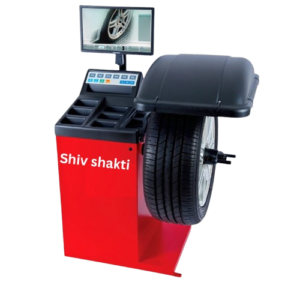
How Does a Digital Wheel balancer Work?
Understanding how a Digital Wheel balancer works helps workshop owners appreciate its importance.
The balancing process generally involves the following steps:
Step 1: Mounting the Wheel
The technician securely mounts the wheel onto the machine using the appropriate cone and locking system.
Step 2: Entering Wheel Dimensions
The operator enters wheel parameters such as:
- Wheel diameter
- Wheel width
- Offset distance
Many premium Digital Wheel balancer models automatically detect these measurements. https://shivshaktigarage.com/wheel-balancer-machine-manufacturer-in-india/
Step 3: Wheel Rotation
The machine spins the wheel at a controlled speed while internal sensors monitor vibration patterns.
Step 4: Imbalance Detection
Highly sensitive electronic sensors identify:
- Static imbalance
- Dynamic imbalance
- Weight distribution differences
Step 5: Weight Position Calculation
The software calculates the exact amount and location of balancing weights required.
Step 6: Weight Installation
The technician installs clip-on or adhesive weights at the indicated positions.
Step 7: Final Verification
The wheel is spun again to confirm that the imbalance has been corrected successfully.
The result is a perfectly balanced wheel that delivers a smoother and safer driving experience.
Major Components of a Digital Wheel balancer
A high-quality Digital Wheel balancer consists of several advanced components that work together to ensure accurate balancing.
Digital Display
A bright digital display shows imbalance values, weight positions, balancing modes, and machine status.
Precision Sensors
Electronic sensors detect even the smallest imbalance in the rotating wheel.
Main Shaft
The precision-machined shaft ensures stable wheel mounting during operation.
Wheel Locking System
A reliable locking mechanism keeps the wheel firmly secured while spinning.
Measurement Arm
Premium machines feature automatic measurement arms for quick data entry.
Control Panel
The user-friendly control panel allows technicians to select balancing modes easily.
Electric Motor
A powerful motor rotates the wheel smoothly for accurate readings. https://shivshaktigarage.com/wheel-balancing-benefits/
Software System
Advanced balancing software processes sensor data and recommends precise correction points.
Top Benefits of Using a Digital Wheel balancer
A Digital Wheel balancer provides numerous advantages for both vehicle owners and workshop businesses.
1. Superior Driving Comfort
Balanced wheels eliminate steering wheel vibration and improve overall ride quality.
2. Longer Tyre Life
Uneven tyre wear is one of the biggest causes of premature tyre replacement. Proper balancing extends tyre life considerably.
3. Better Fuel Efficiency
Balanced wheels rotate more efficiently, reducing rolling resistance and helping improve fuel economy.
4. Improved Vehicle Safety
Wheel imbalance can reduce vehicle stability, especially at high speeds. A Digital Wheel balancer helps maintain safer handling and braking performance.
5. Reduced Suspension Wear
Wheel imbalance places additional stress on:
- Shock absorbers
- Bearings
- Steering components
- Suspension joints
Balancing minimizes unnecessary wear on these expensive parts.
6. Fast Service
Modern Digital Wheel balancer machines complete balancing within minutes, allowing workshops to serve more customers.
7. Professional Accuracy
Digital systems reduce human error and deliver highly consistent balancing results.
Digital Wheel balancer vs Conventional Wheel Balancer
Accuracy
A Digital Wheel balancer offers significantly higher precision than conventional balancing machines.
Speed
Digital systems complete balancing faster with automated calculations.
Ease of Operation
The user-friendly interface makes operation simple, even for less experienced technicians.
Error Reduction
Advanced software minimizes mistakes during balancing.
Productivity
Workshops equipped with a Digital Wheel balancer can handle more vehicles each day compared to workshops using older balancing equipment.
Types of Digital Wheel balancer Machines
Different workshops require different balancing solutions. Choosing the right Digital Wheel balancer depends on the types of vehicles you service.
Manual Digital Wheel balancer
Ideal for:
- Small garages
- Local tyre shops
- Start-up workshops
Advantages:
- Affordable
- Easy operation
- Reliable performance
Semi-Automatic Digital Wheel balancer
Suitable for:
- Medium-sized workshops
- Multi-brand service centres
- Fleet maintenance facilities
Features include:
- Automatic distance measurement
- Multiple balancing modes
- Faster operation
- Improved accuracy
Fully Automatic Digital Wheel balancer
Recommended for:
- Premium automobile workshops
- OEM service centres
- High-volume tyre shops
- Professional wheel service businesses
Advantages include:
- Automatic wheel measurement
- Laser positioning
- Intelligent software
- Automatic braking
- Self-calibration
- High-speed balancing
Features to Look for Before Buying a Digital Wheel balancer
Selecting the right Digital Wheel balancer is a long-term investment. Evaluate these features before making your purchase.
High Precision Sensors
Precision sensors are the heart of every Digital Wheel balancer. They ensure accurate imbalance detection and reliable results.
Multiple Balancing Modes
Choose a machine that supports:
- Dynamic balancing
- Static balancing
- Alloy wheel balancing
- Motorcycle mode (if required)
Automatic Data Entry
Automatic measurement arms reduce setup time and improve efficiency.
Heavy-Duty Construction
A robust steel body ensures durability and long machine life, even in busy workshops.
Fast Cycle Time
A machine with a shorter balancing cycle helps increase daily service capacity.
User-Friendly Display
A clear LCD or LED display makes operation simple and reduces training time for technicians.
Self-Diagnostic Function
Modern Digital Wheel balancer machines include self-diagnostic features that simplify troubleshooting and maintenance.
Low Maintenance Design
A machine designed for minimal maintenance reduces operating costs and maximizes uptime. https://shivshaktigarage.com/wheel-balancer-price/
How to Choose the Best Digital Wheel balancer for Your Workshop
Not every machine is suitable for every business. Consider the following before purchasing a Digital Wheel balancer:
Workshop Size
Estimate the number of vehicles serviced daily and choose a machine that matches your workload.
Vehicle Types
If you work on passenger cars, SUVs, luxury vehicles, or light commercial vehicles, ensure the machine supports the required wheel sizes and weights.
Accuracy Requirements
For premium customer service, prioritize high-precision balancing technology.
Build Quality
Look for durable construction that can withstand continuous daily use.
Service Support
Choose a manufacturer that offers prompt technical support, spare parts availability, and installation assistance.
Warranty
A reliable warranty provides peace of mind and protects your investment. https://g.page/r/CXBa8k4gljxAEBM/review
Why a High-Quality Digital Wheel balancer Is Worth the Investment
Although a premium Digital Wheel balancer may have a higher initial cost, it delivers long-term value through improved productivity, accurate service, reduced repeat work, and enhanced customer trust. Workshops that invest in advanced balancing equipment are better positioned to meet modern automotive service standards and grow their business.
Working Principle of a Digital Wheel balancer
Understanding how a Digital Wheel balancer works helps workshop owners and technicians appreciate why it is one of the most important machines in a modern automotive workshop. Although the balancing process appears simple, the technology inside a modern machine is highly advanced and designed for maximum accuracy.
Step 1: Wheel Mounting
The technician mounts the wheel securely on the spindle using the correct cone and quick-lock nut. Proper mounting is essential because even a slight misalignment can affect balancing accuracy.
A quality Digital Wheel balancer includes precision-engineered cones and adapters that ensure the wheel sits perfectly centered.
Step 2: Measuring Wheel Dimensions
The next step is entering the wheel specifications, including: https://shivshaktigarage.com/best-wheel-balancer-machine/
Wheel Width
The width determines where balancing weights should be placed.
Wheel Diameter
This helps the machine calculate the correct balancing position.
Distance from the Machine
The offset between the wheel and the machine is measured for precise calculations.
Many premium Digital Wheel balancer models automatically detect these dimensions using intelligent measuring arms, saving time and reducing human error.
Step 3: High-Speed Rotation
Once the measurements are entered, the machine spins the wheel at a controlled speed.
During rotation, highly sensitive sensors detect: https://www.indiamart.com/shivshaktigarageequipments/profile.html?srsltid=AfmBOopS0dJP2GviNN0wK6mvS8dc16uj3wxjBq3SMJf2sSWCmuvz_DXz
- Static imbalance
- Dynamic imbalance
- Radial vibration
- Lateral vibration
- Weight distribution differences
The advanced electronics inside the Digital Wheel balancer process this information in just a few seconds.
Step 4: Digital Analysis
The internal processor converts sensor readings into digital data.
The display then shows:
- Required balancing weight
- Exact placement location
- Left-side correction
- Right-side correction
This makes balancing fast, simple, and highly accurate. https://shivshaktigarage.com/wheel-balancer-buying-guide/
Step 5: Weight Installation
The technician installs balancing weights exactly where indicated.
Depending on the wheel type, weights may be:
- Clip-on weights
- Adhesive weights
- Alloy wheel weights
- Hidden weights
Most modern Digital Wheel balancer machines support multiple balancing modes for steel and alloy wheels.
Step 6: Verification Spin
After weight installation, the wheel is spun once more.
If the display reads 0-0, the balancing process is complete, indicating the wheel has been accurately balanced.
Why Accurate Wheel Balancing Is So Important
Many vehicle owners underestimate the importance of wheel balancing, but even a small imbalance can affect vehicle performance.
A Digital Wheel balancer helps prevent several common problems.
Steering Wheel Vibrations
Unbalanced wheels often cause steering vibrations, especially between 80 and 120 km/h.
Uneven Tyre Wear
Incorrect weight distribution leads to irregular tread wear, shortening tyre life.
Poor Ride Comfort
Passengers experience noticeable vibrations on highways.
Suspension Damage
Wheel imbalance increases stress on:
- Shock absorbers
- Suspension bushes
- Bearings
- Tie rods
- Steering rack
Reduced Fuel Efficiency
Balanced wheels roll more smoothly, reducing resistance and supporting better fuel economy.
Applications of a Digital Wheel balancer
A Digital Wheel balancer is used across a wide range of automotive businesses.
Car Workshops
Routine servicing often includes wheel balancing after tyre replacement or repair.
Tyre Shops
Tyre retailers rely on a Digital Wheel balancer to provide complete tyre fitting and balancing services.
Multi-Brand Service Centers
Professional service centres use digital balancing machines to deliver consistent, manufacturer-level quality.
Automobile Dealerships
Authorized dealerships balance wheels during:
- Pre-delivery inspection
- Periodic maintenance
- Tyre replacement
- Suspension repairs

Fleet Maintenance Companies
Large transport fleets benefit from proper balancing because it reduces tyre replacement costs and minimizes vehicle downtime.
Luxury Car Service Centres
Premium vehicles require highly accurate balancing to maintain smooth driving at high speeds. A modern Digital Wheel balancer ensures precision suitable for luxury cars.
Industries That Use Digital Wheel balancer Machines
The usefulness of a Digital Wheel balancer extends beyond passenger vehicles.
Industries include:
Passenger Car Workshops
Ideal for hatchbacks, sedans, SUVs, and crossovers.
Commercial Vehicle Service Centres
Suitable for light commercial vehicles with compatible wheel sizes.
Performance Vehicle Workshops
Essential for sports cars where high-speed stability is critical.
Government Transport Departments
Used to maintain official vehicle fleets.
Taxi Fleet Operators
Improves ride comfort and reduces operating costs.
Driving Schools
Helps maintain training vehicles in safe operating condition.
Common Wheel Balancing Problems
Even experienced technicians encounter balancing issues. Knowing the common causes helps achieve better results.
Incorrect Wheel Mounting
Improper centering is one of the biggest causes of inaccurate balancing.
Always use the correct cone and tighten the wheel securely.
Dirty Wheel Surface
Mud, grease, rust, or old adhesive can interfere with balancing.
Clean the wheel thoroughly before starting.
Damaged Rim
A bent or cracked rim cannot be balanced correctly until repaired or replaced.
Poor Quality Weights
Using low-quality balancing weights may cause them to loosen over time.
Choose high-quality clip-on or adhesive weights.
Sensor Calibration Issues
If the Digital Wheel balancer is not calibrated regularly, balancing accuracy may decrease.
Follow the manufacturer’s calibration schedule.
Daily Maintenance Tips for a Digital Wheel balancer
Routine maintenance extends machine life and ensures consistent performance.
Keep the Machine Clean
Remove dust, grease, and metal particles from:
- Control panel
- Measuring arm
- Shaft
- Wheel mounting area
Inspect Cones Regularly
Worn cones reduce centering accuracy.
Replace damaged cones immediately.
Check Calibration
Perform calibration according to the manufacturer’s recommendations.
Lubricate Moving Parts
Proper lubrication minimizes wear and ensures smooth operation.
Inspect Electrical Connections
Loose wiring may cause display errors or inaccurate readings. https://shivshaktigarage.com/wheel-balancer-vs-alignment/
Keep the Machine Level
An uneven floor can affect balancing accuracy.
Always install the Digital Wheel balancer on a stable, level surface.
Safety Tips While Operating a Digital Wheel balancer
Safety is essential in every workshop.
Wear Safety Equipment
Use:
- Safety glasses
- Protective gloves
- Safety shoes
Secure the Wheel Properly
Never operate the machine if the wheel is loosely mounted.
Avoid Touching Rotating Parts
Wait until the wheel stops completely before handling it.
Follow Weight Limits
Never exceed the machine’s maximum wheel weight capacity.
Regular Inspection
Inspect the machine daily for loose bolts, damaged cables, or unusual noises.
Digital Wheel balancer Price in India
The Digital Wheel balancer price depends on several factors, including technology, build quality, automation, and brand reputation.
Some of the key factors influencing pricing include:
Automation Level
- Manual digital machines
- Semi-automatic models
- Fully automatic systems
Advanced automation generally increases productivity and ease of use. https://shivshaktigarage.com/wheel-alignment-machine-manufacturer-in-india/
Balancing Accuracy
Machines with higher precision sensors and advanced software often offer superior performance and long-term value.
Display Technology
A clear LCD or LED display improves usability and helps technicians work more efficiently. https://www.instagram.com/shiv_shakti7799/
Build Quality
Heavy-duty steel construction enhances durability, especially in high-volume workshops.
Additional Features
Premium Digital Wheel balancer models may include:
- Laser positioning
- Automatic data entry
- Self-calibration
- Hidden weight mode
- Alloy wheel mode
- Optimization programs
- Multiple balancing modes
Brand Support
A trusted manufacturer offering installation, spare parts, technical assistance, and warranty support provides greater long-term reliability.
Return on Investment (ROI)
A Digital Wheel balancer is more than just workshop equipment—it is a revenue-generating asset.
It contributes to profitability by:
- Increasing daily service capacity
- Reducing balancing errors
- Minimizing customer complaints
- Encouraging repeat business
- Extending tyre life for customers
- Enhancing workshop credibility
- Supporting premium service pricing
For workshops handling multiple vehicles each day, the investment can pay for itself over time through improved efficiency and customer satisfaction. https://www.exportersindia.com/shiv-shakti-garage-equipments/
Expert Tips for Maximum Performance
Experienced technicians follow these best practices to get the most from a Digital Wheel balancer:
- Clean every wheel before balancing.
- Use the correct cone for each wheel size.
- Calibrate the machine at recommended intervals.
- Replace worn accessories promptly.
- Train technicians on proper operating procedures.
- Store balancing weights in a clean, dry environment.
- Verify every wheel with a final spin before installation.
- Perform preventive maintenance on schedule.
These practices help maintain accuracy and extend the life of both the machine and the wheels it services
Frequently Asked Questions (FAQs) About Digital Wheel balancer
A comprehensive FAQ section helps answer common customer questions while improving your SEO performance by targeting long-tail search queries related to Digital Wheel balancer.
1. What is a Digital Wheel balancer?
A Digital Wheel balancer is an advanced automotive machine that detects wheel imbalance and guides technicians to place balancing weights accurately. It ensures smoother driving, reduces tyre wear, improves fuel efficiency, and enhances vehicle safety.
2. Why is a Digital Wheel balancer important?
A Digital Wheel balancer helps eliminate steering vibrations, extends tyre life, improves ride comfort, protects suspension components, and provides a safer driving experience. https://shivshaktigarage.com/tyre-changer-machine-manufacturer-in-india/
3. How often should wheels be balanced?
Experts recommend wheel balancing:
- Every 8,000–10,000 km
- After tyre replacement
- After puncture repair
- If steering vibration occurs
- After hitting a pothole or curb
4. Can unbalanced wheels damage a vehicle?
Yes. Driving with unbalanced wheels can lead to:
- Uneven tyre wear
- Steering vibration
- Suspension damage
- Wheel bearing wear
- Reduced driving comfort
- Increased maintenance costs https://www.justdial.com/Delhi/Shiv-Shakti-Garage-Equipments-Vishnu-Garden/011PXX11-XX11-250718154737-U9U2_BZDET
5. How long does wheel balancing take?
With a modern Digital Wheel balancer, balancing one wheel usually takes 2–5 minutes, depending on wheel size and condition.
6. Can alloy wheels be balanced?
Yes. Modern Digital Wheel balancer machines support alloy wheel balancing using adhesive weight modes and hidden weight programs.
7. Is a Digital Wheel balancer suitable for SUVs?
Absolutely. Most professional Digital Wheel balancer machines support: https://shivshaktigarage.com/workshop-wheel-balancing-setup/
- Hatchbacks
- Sedans
- SUVs
- MPVs
- Crossovers
- Light commercial vehicles
8. What is the difference between wheel alignment and wheel balancing?
Wheel balancing corrects weight distribution in the wheel and tyre assembly.
Wheel alignment adjusts the vehicle’s suspension angles to ensure proper tyre contact with the road.
Both services complement each other but solve different problems.https://shivshaktigarage.com/car-workshop-cost-in-india/
9. Does wheel balancing improve fuel efficiency?
Yes. Properly balanced wheels reduce rolling resistance, allowing the vehicle to move more efficiently and potentially improving fuel economy.
10. What features should I look for in a Digital Wheel balancer?
Look for features such as:
- High-precision sensors
- Automatic data entry
- Multiple balancing modes
- LED/LCD display
- Laser positioning
- Self-calibration
- Heavy-duty construction
- Easy maintenance
- Reliable after-sales support
Why Choose Shiv Shakti Garage Equipments?
When investing in a Digital Wheel balancer, choosing the right supplier is just as important as choosing the right machine. Shiv Shakti Garage Equipments has built a strong reputation by providing reliable garage machinery and dependable customer support across India.
18+ Years of Industry Experience
With more than 18 years of experience in automotive garage equipment, we understand the practical needs of workshops—from small tyre shops to large service centres.
High-Quality Machines
Our Digital Wheel balancer machines are engineered for:
- High accuracy
- Long service life
- Fast balancing cycles
- Easy operation
- Low maintenance
Pan India Supply
We supply garage equipment to customers across India with timely delivery and installation assistance.
Technical Support
Our team provides:
- Installation guidance
- Operator training
- Spare parts support
- Technical assistance
- After-sales service
Complete Garage Solutions
In addition to a Digital Wheel balancer, we offer:
- Wheel Alignment Machines
- Tyre Changer Machines
- Two Post Lifts
- Car Washing Lifts
- Scissor Lifts
- Paint Booths
- Air Compressors
- Injector Cleaning Machines
- AC Service Machines
- Complete Car Workshop Setup Solutions https://www.tradeindia.com/products/hydraulic-washing-lift-10303129.html
Whether you’re starting a new workshop or upgrading an existing one, we can help you build a professional and efficient service facility.
Digital Wheel balancer Buying Checklist
Before purchasing a Digital Wheel balancer, use this checklist to make an informed decision:
✔ High balancing accuracy
✔ Durable steel body
✔ Easy-to-read digital display
✔ Automatic measurement arm (preferred)
✔ Supports alloy and steel wheels
✔ Multiple balancing modes
✔ Fast balancing cycle
✔ Self-calibration feature
✔ Strong after-sales support
✔ Availability of spare parts
✔ Installation assistance
✔ Operator training
✔ Warranty coverage

Expert Tips to Maximize the Life of Your Digital Wheel balancer
To ensure long-term performance:
- Clean the machine every day.
- Calibrate it at recommended intervals.
- Replace worn cones and accessories promptly.
- Use quality balancing weights.
- Keep the spindle clean and rust-free.
- Train operators on correct mounting procedures.
- Inspect electrical connections regularly.
- Avoid exceeding the machine’s wheel weight capacity.
- Schedule preventive maintenance.
Following these practices will help maintain consistent balancing accuracy and reduce downtime.
Common Mistakes to Avoid
Even with a modern Digital Wheel balancer, these mistakes can reduce accuracy:
- Mounting the wheel incorrectly
- Using damaged cones
- Ignoring machine calibration
- Failing to clean the wheel before balancing
- Using poor-quality balancing weights
- Skipping the final verification spin
- Overlooking damaged rims or tyres
Avoiding these issues improves service quality and customer satisfaction.
Final Thoughts
A Digital Wheel balancer is one of the most valuable machines in any modern automotive workshop. It delivers accurate wheel balancing, improves driving comfort, extends tyre life, reduces suspension wear, and enhances overall vehicle performance.
For workshop owners, it also creates opportunities to increase productivity, attract more customers, and generate consistent service revenue. By choosing a reliable machine and maintaining it properly, you can deliver professional results that build trust and long-term customer relationships.
If you are planning to upgrade your workshop or start a new tyre service business, investing in a high-quality Digital Wheel balancer is a smart decision that will continue to provide value for years to come.
Why Invest Today?
The automotive industry continues to grow, and customer expectations for precision service are higher than ever. Workshops equipped with advanced digital balancing technology stand out by offering:
- Faster turnaround times
- Greater balancing accuracy
- Better customer satisfaction
- Reduced repeat work
- Increased profitability
- Enhanced workshop reputation
A quality Digital Wheel balancer is not just a machine—it is an investment in your workshop’s future.
Contact Shiv Shakti Garage Equipments
Shiv Shakti Garage Equipments is a trusted manufacturer and supplier of premium car garage machinery in India.
Our Product Range Includes:
- Digital Wheel balancer
- Wheel Alignment Machine
- Tyre Changer Machine
- Two Post Lift
- Car Washing Lift
- Scissor Lift
- Paint Booth
- AC Service Machine
- Injector Cleaning Machine
- Air Compressor
- Complete Car Workshop Setup
Contact Us Today
Shiv Shakti Garage Equipments
Mobile: +91-8882116582, +91-7982474051
Website: https://shivshaktigarage.com