
Wheel Balancer Buying Guide: The Ultimate 2026 Guide to Choosing the Best Wheel Balancer Machine
Buying the right wheel balancer is one of the smartest investments you can make for your garage, tyre shop, or automobile workshop. A high-quality wheel balancer improves customer satisfaction, increases workshop productivity, reduces tyre wear, and ensures vehicles leave your garage with perfectly balanced wheels.
However, with hundreds of wheel balancing machines available in today’s market, choosing the right equipment can become confusing. Different brands offer different technologies, prices, balancing modes, automation levels, and additional features.
This Wheel Balancer Buying Guide has been created specifically for workshop owners, tyre dealers, automobile service centers, and entrepreneurs planning to start a new garage.
By the end of this guide, you’ll know exactly:
- Which wheel balancer is best for your business
- Which features actually matter
- Which specifications you should never ignore
- Common buying mistakes
- How to maximize your investment
- How to choose a reliable manufacturerhttps://shivshaktigarage.com/common-balancing-problems/
Let’s begin.
Why Every Modern Garage Needs a Wheel Balancer
Wheel balancing is no longer an optional service.
Every vehicle owner expects vibration-free driving, improved tyre life, and smooth steering.
Even a slight imbalance can lead to:
- Steering vibration
- Uneven tyre wear
- Suspension damage
- Poor fuel economy
- Customer complaints
- Reduced tyre lifespan
This is why every professional workshop should invest in a reliable wheel balancing machine.
A proper Wheel Balancer Buying Guide always starts with understanding the importance of wheel balancing itself.
What is a Wheel Balancer Machine?
A wheel balancer is an automotive garage machine used to detect weight imbalance in vehicle wheels.
The machine rotates the wheel at a specific speed and measures:
- Dynamic imbalance
- Static imbalance
- Radial deviation
- Weight correction positions
The operator then installs balancing weights exactly where the machine recommends.
The result is:
- Smooth driving
- Better tyre performance
- Longer suspension life
- Improved customer satisfaction
How Does a Wheel Balancer Work?
Modern digital wheel balancers use advanced sensors and microprocessors.
The basic process includes:
Step 1
Mount the wheel securely on the spindle.
Step 2
Enter wheel dimensions.
Step 3
The machine spins the wheel.
Step 4
Sensors identify imbalance.
Step 5
Display shows exact weight placement.
Step 6
Attach balancing weights.
Step 7
Recheck the wheel.
Once completed, the wheel becomes perfectly balanced. https://shivshaktigarage.com/wheel-balancer-machine-manufacturer-in-india/
Why Buying the Right Wheel Balancer Matters
Many garage owners buy the cheapest machine available.
Unfortunately, cheap machines often create problems like:
- Wrong weight readings
- Slow operation
- Sensor failure
- Frequent calibration
- Poor customer experience
- Low productivity
Following a proper Wheel Balancer Buying Guide helps you avoid these costly mistakes.
A premium machine offers:
- Accurate balancing
- Fast operation
- Reliable performance
- Lower maintenance
- Better ROI
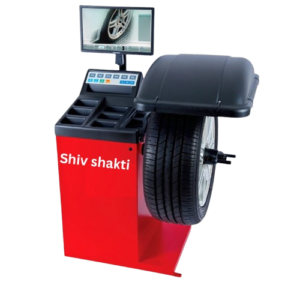
Different Types of Wheel Balancer Machines
Understanding the different types is one of the most important sections of any Wheel Balancer Buying Guide.
1. Manual Wheel Balancer
Best For:
- Small garages
- Rural workshops
- Low-budget startups
Advantages
- Affordable
- Easy to maintain
- Low operating cost
Disadvantages
- Less accurate
- Slow operation
- Requires experienced operator
2. Digital Wheel Balancer
Most Popular Choice
Digital machines dominate today’s market because they offer:
- LCD display
- Automatic measurement
- Faster balancing
- High accuracy
- User-friendly operation
Ideal For
- Car workshops
- Multi-brand garages
- Tyre dealers
3. Automatic Wheel Balancer
Automatic models include:
- Auto distance measurement
- Auto width measurement
- Auto diameter measurement
Benefits
- Saves time
- Reduces human error
- Higher productivity
4. Heavy-Duty Wheel Balancer
Designed for:
- SUVs
- Pickup trucks
- Commercial vehicles
Features include:
- Higher load capacity
- Larger shaft
- Heavy-duty motor
- Industrial construction
Wheel Balancer Buying Guide for Different Garage Sizes
Small Garage
Recommended Machine
- Semi-automatic digital wheel balancer
Investment
Affordable
Ideal Daily Vehicles
10–20
Medium Workshop
Recommended
- Fully digital wheel balancer
Daily Vehicles
20–50
Features Required
- Automatic data entry
- Multiple balancing modes
- LED display
Large Service Center
Recommended
- Premium automatic wheel balancer
Daily Vehicles
50+
Features
- Laser positioning
- Automatic brake
- Smart optimization
- Advanced software
Features You Should Never Ignore
A complete Wheel Balancer Buying Guide must explain the most important buying features.
High Accuracy
Accuracy determines customer satisfaction.
Choose machines with advanced digital sensors.
Fast Spin Cycle
Faster machines increase workshop productivity.
A professional machine should complete balancing within seconds.
Automatic Measurement
Automatic measurement reduces operator mistakes.
Multiple Balancing Modes
Your machine should support:
- Dynamic mode
- Static mode
- Alloy mode
- Motorcycle mode (optional)
Digital Display
Choose:
- LCD
- LED
- HD screen
A clear display improves workflow.
Self Calibration
Calibration keeps readings accurate.
Machines with self-calibration reduce maintenance costs.
Automatic Braking
This feature:
- Saves time
- Improves safety
- Increases efficiency
Laser Weight Positioning
Premium machines use laser indicators to show exact weight placement.
Benefits include:
- Faster balancing
- Better precision
- Reduced rework
Important Technical Specifications
When comparing machines, always check these specifications. https://shivshaktigarage.com/workshop-wheel-balancing-setup/
Maximum Wheel Weight
Usually:
- 65 kg
- 70 kg
- 75 kg
Choose according to your customer vehicles.
Balancing Accuracy
Professional machines offer:
±1 gram
Never compromise on this specification.
Motor Power
A stronger motor provides:
- Faster operation
- Longer lifespan
- Better performance
Measuring Time
Good machines finish balancing within:
6–8 seconds
Wheel Diameter Capacity
Look for machines supporting:
10″ to 24″
or larger if servicing SUVs.
Rim Width Range
Usually:
1.5″–20″
More flexibility means serving more vehicle types.
Should You Buy an Imported or Indian Wheel Balancer?
This is one of the biggest questions in every Wheel Balancer Buying Guide.
Imported Machines
Advantages
- Attractive design
- Advanced technology
Disadvantages
- Expensive spare parts
- Longer service time
- Higher maintenance cost
Indian Manufactured Machines
Advantages
- Affordable pricing
- Easy spare availability
- Quick service support
- Lower maintenance
- Better after-sales support
Many Indian manufacturers now offer international-quality wheel balancers with advanced digital technology at competitive prices.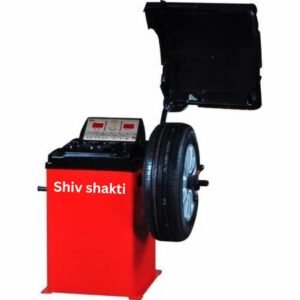
Common Mistakes Buyers Make
Avoid these costly mistakes:
- Buying only based on price
- Ignoring warranty
- Choosing unknown brands
- Not checking spare parts availability
- Ignoring after-sales service
- Buying without operator training
- Not verifying machine accuracy
- Skipping customer reviews
Following this Wheel Balancer Buying Guide helps you make a smart investment instead of an expensive mistake.
Complete Wheel Balancer Buying Checklist
Before investing in a wheel balancing machine, make sure you evaluate every important factor. This Wheel Balancer Buying Guide checklist will help you avoid costly mistakes and ensure you purchase a machine that delivers long-term value.
1. Understand Your Business Requirements
Ask yourself these questions:
- How many vehicles do you service daily? https://shivshaktigarage.com/digital-wheel-balancer/
- Do you only balance car wheels, or also SUVs and light commercial vehicles?
- Are alloy wheels common among your customers?
- Will the machine be used continuously throughout the day?
Your answers will determine the type and capacity of the wheel balancer you need.
2. Check the Machine’s Accuracy
Accuracy is the heart of any wheel balancer.
A professional machine should offer:
- Balancing accuracy of ±1 gram
- Stable sensor performance
- Consistent readings
- Automatic error detection
A machine with poor accuracy will result in customer complaints, repeat work, and reduced workshop credibility.
3. Evaluate Build Quality
A durable machine lasts longer and reduces maintenance costs.
Look for:
Heavy Steel Body
A rigid frame minimizes vibrations and ensures consistent balancing.
Rust-Resistant Coating
Protects the machine from corrosion, especially in humid workshop environments.
High-Quality Spindle
The spindle should be made from hardened steel for long service life and accurate wheel mounting.
4. Motor Performance
The motor directly impacts machine efficiency.
A quality motor should provide:
- Smooth operation
- Fast spin cycles
- Low noise levels
- Long operational life
- Energy efficiency
Avoid machines with underpowered motors, as they may struggle with heavier wheels.
5. User-Friendly Interface
A modern wheel balancer should be easy for operators to use.
Preferred features include:
- Large LCD display
- Simple control panel
- Intuitive software
- Quick navigation
- Error notifications
A user-friendly interface reduces training time and improves productivity.
Essential Accessories Included with a Wheel Balancer
A good supplier should provide all necessary accessories.
These may include:
Wheel Cones
Different cone sizes ensure proper wheel centering. https://shivshaktigarage.com/best-car-washing-scissor-lift-in-india/
Quick Lock Nut
Allows faster wheel mounting and removal.
Weight Hammer
Used for installing and removing clip-on balancing weights.
Measuring Caliper
Measures wheel dimensions accurately.
Calibration Weight
Essential for periodic machine calibration.
Protective Hood
Improves operator safety during wheel rotation.
Before purchasing, confirm what accessories are included in the package. https://shivshaktigarage.com/wheel-balancer-vs-alignment/
Automatic vs Semi-Automatic Wheel Balancer
Choosing between automatic and semi-automatic models is a key decision in any Wheel Balancer Buying Guide.
Semi-Automatic Wheel Balancer
Advantages
- Lower purchase cost https://shivshaktigarage.com/tyre-changer-machine-manufacturer-in-india/
- Easy maintenance
- Suitable for small garages
- Reliable performance
Disadvantages
- Manual measurement required
- Slightly slower operation
- More operator involvement
Fully Automatic Wheel Balancer
Advantages
- Faster workflow
- Automatic wheel measurement
- Reduced operator error
- Higher productivity
- Professional appearance
Disadvantages
- Higher initial investment
- More advanced electronics
For workshops handling a high volume of vehicles, an automatic model often provides the best return on investment.
Wheel Balancer Buying Guide by Workshop Type
Car Service Centers
Recommended Features:
- Automatic data entry
- Alloy wheel mode
- Laser positioning
- High-speed balancing
- LED display
Tyre Shops
Recommended Features: https://g.page/r/CXBa8k4gljxAEBM/review
- Fast balancing cycle
- Easy weight placement
- Compact footprint
- Low maintenance
Multi-Brand Workshops
Ideal machine should support:
- Hatchbacks
- Sedans
- SUVs
- Luxury vehicles
- Light commercial vehicles
Premium Automobile Workshops
Premium garages should invest in advanced wheel balancers with: https://www.justdial.com/Delhi/Shiv-Shakti-Garage-Equipments-Vishnu-Garden/011PXX11-XX11-250718154737-U9U2_BZDET
- Laser guidance
- Automatic braking
- Intelligent optimization
- Digital diagnostics
- Multiple balancing programs
Wheel Balancer Price Guide
One of the most common questions in this Wheel Balancer Buying Guide is about pricing.
Prices vary depending on:
- Technology
- Automation level
- Build quality
- Brand
- Features
- Warranty
Entry-Level Machines
Best for:
- Small workshops
- New businesses
Typically include:
- Manual measurement
- Basic balancing modes
- Standard display
Mid-Range Machines
Ideal for:
- Growing service centers
- Professional tyre shops
Offer:
- Better accuracy
- Faster operation
- Improved durability
- Additional balancing modes
Premium Machines
Designed for:
- High-volume workshops
- Authorized dealerships
- Professional service centers
Include:
- Automatic measurement
- Laser positioning
- Smart software
- Enhanced productivity
- Advanced diagnostics
While premium models require a higher initial investment, they often deliver greater efficiency and long-term savings.
How to Calculate Return on Investment (ROI)
A wheel balancer is not just an expense—it’s a revenue-generating asset.
Consider the following example:
- Average balancing charge per vehicle
- Number of vehicles balanced daily
- Monthly operating days
- Maintenance costs
As vehicle volume increases, the machine can recover its investment quickly while continuing to generate profit.
Signs You’re Buying the Wrong Wheel Balancer
Avoid purchasing a machine if you notice:
- No warranty
- No installation support
- Poor customer reviews
- Unknown manufacturer
- Limited spare parts availability
- No calibration service
- Inaccurate readings
- Weak after-sales support https://www.indiamart.com/shivshaktigarageequipments/profile.html?srsltid=AfmBOorYlWex0XOe-W2-obQmQGlDSn-cdmjgtKByGBbZdoYHYH5OSCZa
A proper Wheel Balancer Buying Guide emphasizes choosing a trusted manufacturer over the lowest price.
Maintenance Tips for Long Machine Life
Proper maintenance ensures consistent accuracy and extends machine lifespan. https://shivshaktigarage.com/wheel-balancer-maintenance/
Daily Maintenance
- Clean the machine after use
- Remove dust and debris
- Inspect the spindle
- Check the display for error messages
Weekly Maintenance
- Clean wheel cones
- Inspect the quick lock nut
- Tighten loose bolts
- Check electrical connections
Monthly Maintenance
- Perform calibration
- Inspect motor performance
- Lubricate moving parts (if recommended)
- Verify balancing accuracy
Annual Maintenance
Schedule a professional inspection to:
- Test sensors
- Update software (if applicable)
- Check bearings
- Replace worn components
Regular maintenance reduces downtime and improves customer confidence.
Common Features That Add Value
When comparing machines, look for features such as:
- Automatic wheel measurement
- Self-calibration
- Laser weight positioning
- Automatic braking
- Digital diagnostics
- Multiple balancing modes
- Energy-efficient motor
- Heavy-duty construction
- Fast balancing cycle
- Low noise operation
These features improve speed, accuracy, and overall workshop efficiency. https://shivshaktigarage.com/wheel-balancer-buying-guide/
Questions to Ask Before Buying
Use this checklist when speaking with a supplier:
- What warranty is included?
- Are spare parts readily available?
- Is installation provided?
- Will operator training be included?
- How quickly is service support available?
- Can the machine handle alloy wheels?
- What is the balancing accuracy?
- Is calibration simple?
- Are software updates available?
- What accessories come with the machine?
Asking the right questions helps you make an informed decision.
Why After-Sales Service Matters
Even the best machines require occasional maintenance. https://shivshaktigarage.com/wheel-balancing-benefits/
Choose a supplier that offers:
- Fast technical support
- Readily available spare parts
- Installation assistance
- Operator training
- Warranty coverage
- Preventive maintenance services
Reliable after-sales service minimizes downtime and protects your investment.
Choosing the Right Manufacturer
The quality of your wheel balancer depends greatly on the manufacturer.
Look for companies with:
- Years of industry experience
- Positive customer feedback
- Nationwide service network
- Quality certifications
- Strong technical support
- Transparent warranty policies
- Availability of spare parts
A reputable manufacturer is more likely to provide dependable products and long-term support.
Latest Wheel Balancer Technology in 2026 https://www.instagram.com/shiv_shakti7799/
The automotive industry is evolving rapidly, and wheel balancing machines are becoming smarter, faster, and more accurate. Investing in the latest technology can help your workshop stay competitive and deliver premium service.
1. Laser Weight Positioning
Modern wheel balancers use laser guidance to indicate the exact position for placing balancing weights.
Benefits
- Faster balancing
- Higher precision
- Fewer operator errors
- Reduced balancing time
- Better customer satisfaction
2. Automatic Data Entry
Advanced machines automatically measure:
- Wheel diameter
- Wheel width
- Offset distance
This eliminates manual measurement errors and increases efficiency. https://www.tradeindia.com/products/3d-wheel-alignment-machine-10303117.html
3. Intelligent Optimization Programs
Premium wheel balancers can optimize weight placement, reducing the total amount of balancing weight required.
Advantages include:
- Cleaner wheel appearance
- Lower balancing weight usage
- Improved balancing accuracy
- Faster service
4. High-Resolution Digital Displays
Modern LCD and LED displays provide:
- Easy-to-read measurements
- Visual balancing guidance
- Error notifications
- Maintenance reminders
- User-friendly operation
5. Self-Diagnostic Systems
Many premium machines include built-in diagnostics that detect:
- Sensor issues
- Motor problems
- Calibration errors
- Software faults
This helps reduce downtime and maintenance costs.
Wheel Balancer Buying Guide: Common Mistakes to Avoid
Buying a wheel balancer is a long-term investment. Avoid these common mistakes to ensure you get the best value.
Buying Based Only on Price
A low-cost machine may seem attractive, but it often comes with:
- Lower accuracy
- Poor durability
- Limited features
- Higher maintenance costs
Always compare quality, service, and warranty—not just price.
Ignoring After-Sales Support
A machine without reliable service can become a costly problem. https://shivshaktigarage.com/wheel-balancer-price/
Choose a supplier that provides:
- Installation
- Training
- Technical support
- Spare parts
- Warranty assistance
Choosing the Wrong Capacity
A machine designed for small passenger cars may not handle SUVs or larger vehicles efficiently.
Select a model that matches your customer base and future business growth.
Overlooking Calibration
Regular calibration is essential for maintaining balancing accuracy.
Ask your supplier:
- How often calibration is required
- Whether calibration is easy
- If calibration tools are included
Not Checking Spare Parts Availability
Before purchasing, confirm that essential spare parts are readily available. Easy access to parts reduces downtime and keeps your workshop running smoothly.
Expert Tips Before You Buy
Industry professionals recommend the following:
- Buy from an experienced manufacturer with a strong reputation.
- Choose a machine with at least a one-year warranty.
- Verify the availability of service engineers.
- Ask for a live product demonstration.
- Request operator training during installation.
- Compare specifications rather than relying only on marketing claims.
- Invest in a machine that can support future business growth.
Why Choose Shiv Shakti Garage Equipments?
If you’re looking for a trusted supplier in India, Shiv Shakti Garage Equipments offers reliable garage machinery designed for professional performance.
Why Customers Choose Us
- Over 18 years of industry experience
- Premium quality garage equipment
- High-accuracy digital wheel balancers
- Competitive factory-direct pricing
- Nationwide delivery across India
- Professional installation support
- Technical guidance and operator training
- Genuine spare parts availability
- Responsive after-sales service
- Complete garage setup solutions
Whether you’re opening a new workshop or upgrading an existing one, we can help you choose the right wheel balancing machine for your business needs.
Frequently Asked Questions (FAQs)
1. What is a wheel balancer?
A wheel balancer is a machine used to detect and correct weight imbalance in vehicle wheels, ensuring smooth driving and even tyre wear.
2. Why is wheel balancing important?
Wheel balancing reduces steering vibration, improves tyre life, enhances driving comfort, and protects suspension components.
3. Who should buy a wheel balancer?
- Tyre shops
- Automobile workshops
- Multi-brand service centers
- Car dealerships
- Fleet maintenance companies
4. What is the ideal balancing accuracy?
Professional wheel balancers generally provide an accuracy of ±1 gram, which is suitable for most passenger vehicles.
5. Can one machine balance alloy wheels?
Yes. Most modern digital wheel balancers include dedicated modes for alloy wheels.
6. How often should the machine be calibrated?
Calibration frequency depends on usage and manufacturer recommendations, but regular checks help maintain consistent accuracy.
7. What maintenance does a wheel balancer require?
Basic maintenance includes cleaning, checking accessories, inspecting the spindle, and performing periodic calibration.
8. Is operator training necessary?
Yes. Proper training improves accuracy, speeds up operation, and helps avoid incorrect balancing procedures. https://www.exportersindia.com/shiv-shakti-garage-equipments/
9. Can a wheel balancer improve workshop profits?
Absolutely. Faster service, improved customer satisfaction, and repeat business can significantly increase workshop revenue.
10. How long does a quality wheel balancer last?
With proper maintenance, a high-quality machine can provide many years of dependable service.
Final Wheel Balancer Buying Checklist
Before making your purchase, confirm the following: https://www.youtube.com/@Shivshaktigarage
✅ High balancing accuracy
✅ Strong and durable construction
✅ Automatic measurement features
✅ Easy-to-use interface
✅ Self-calibration capability
✅ Reliable after-sales support
✅ Spare parts availability
✅ Warranty coverage
✅ Operator training
✅ Trusted manufacturer
Final Thoughts
Choosing the right wheel balancing machine is more than just comparing prices. It is an investment in your workshop’s reputation, productivity, and long-term profitability.
This Wheel Balancer Buying Guide has covered everything you need to know—from understanding machine types and essential features to maintenance, buying tips, and the latest technologies.
A carefully selected wheel balancer will help you:
- Deliver precise wheel balancing
- Increase customer satisfaction
- Reduce tyre wear complaints
- Improve workshop efficiency
- Generate higher profits
- Build long-term customer trust
Take your time, compare your options carefully, and choose a machine that matches both your current needs and future business goals.
Contact Shiv Shakti Garage Equipments
Shiv Shakti Garage Equipments is one of India’s trusted suppliers of premium garage machinery, offering complete workshop solutions backed by years of industry experience.
Our Product Range
- Digital Wheel Balancers
- Wheel Alignment Machines
- Tyre Changer Machines
- Two Post Car Lifts
- Car Washing Lifts
- Scissor Lifts
- Paint Booths
- Air Compressors
- Injector Cleaning Machines
- Complete Garage Setup Solutions
📞 Call: +91-7827552107
🌐 Website: https://shivshaktigarage.com
📍 Serving Customers Across India